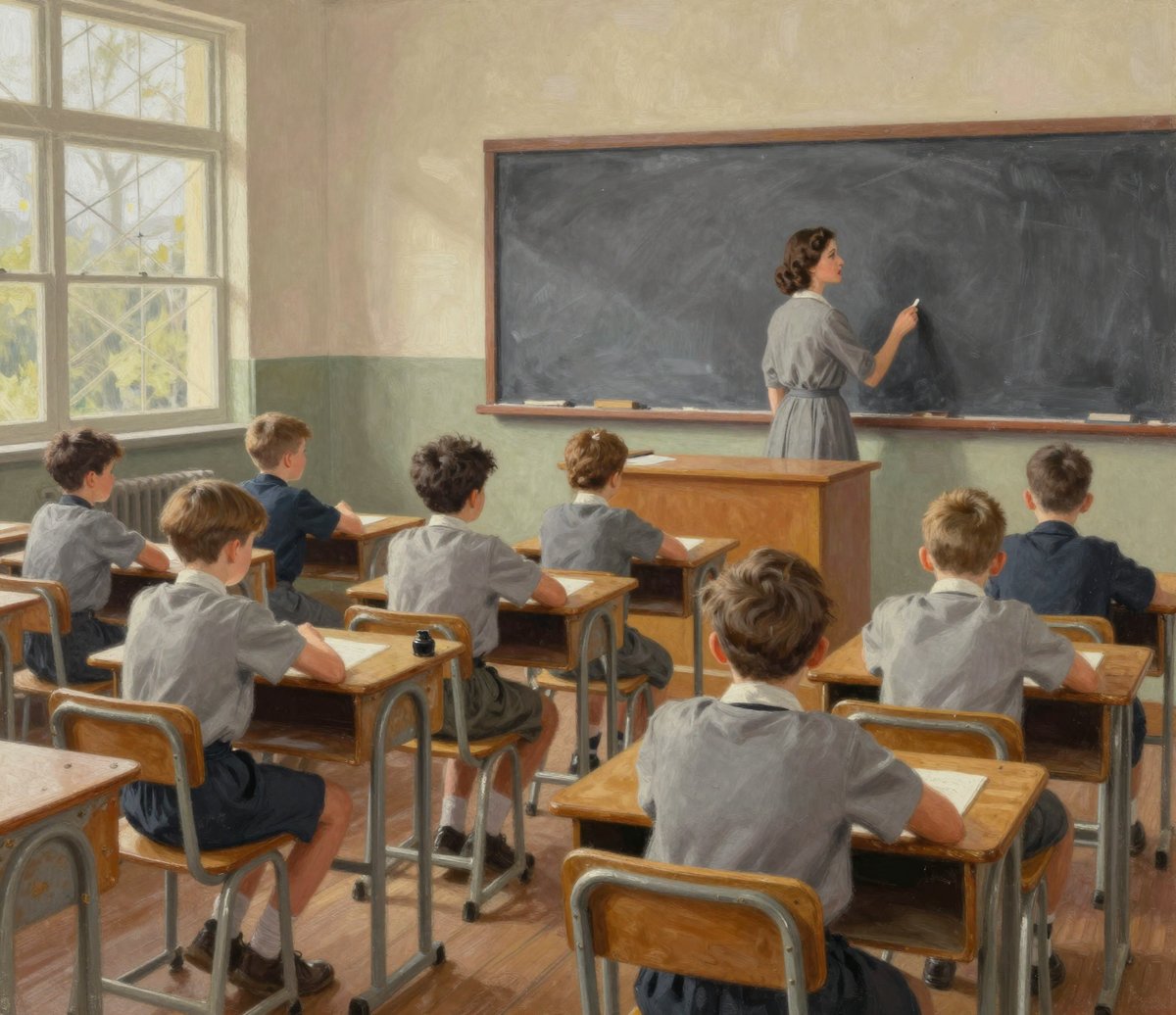
Thirty-odd children, iron-framed desks, and Dot Campbell at the board. This is the detective's office for six books, and none of them know it, including her.
The patch
This is the same suburb before the peace: 1939 to 1944, with rationing, brownouts, sandbags against the shopfronts and the young men going in ones and twos off Campbell Parade. The war itself stays at the edge of the frame — the harbour, the enlistment lines, the midget submarines one night in 1942 — and the books stay resolutely at home.
The centre of the patch is not the beach but a classroom up at Randwick, thirty-two children at iron-framed desks, and a house where the wireless is on, the chair opposite is empty and the letters are propped on the mantel. That is where every one of these six stories starts and finishes.
The set
- The classroom — the teacher's real instrument: thirty-odd children who go everywhere, notice everything and repeat it without knowing what it is worth.
- The house, the wireless and the mantel — the chair nobody sits in, the letters propped against the clock, and a small blue-and-tan terrier who has taken up a position by the logbook.
- The surf club and Campbell Parade — where the enlisting happens, and where the street learns to do without the men who used to be on it. Sandbags, brownout, a tram still running.
- The vet surgery — a recurring hub across the road from all of it, and the route the first case runs along. A surfboard is racked in the back room; it belongs to somebody else's story.
- A flat kept in Bondi — held by a woman based a long way south on the war's hidden work, who comes back intermittently and sets crosswords for the local paper while she is here.
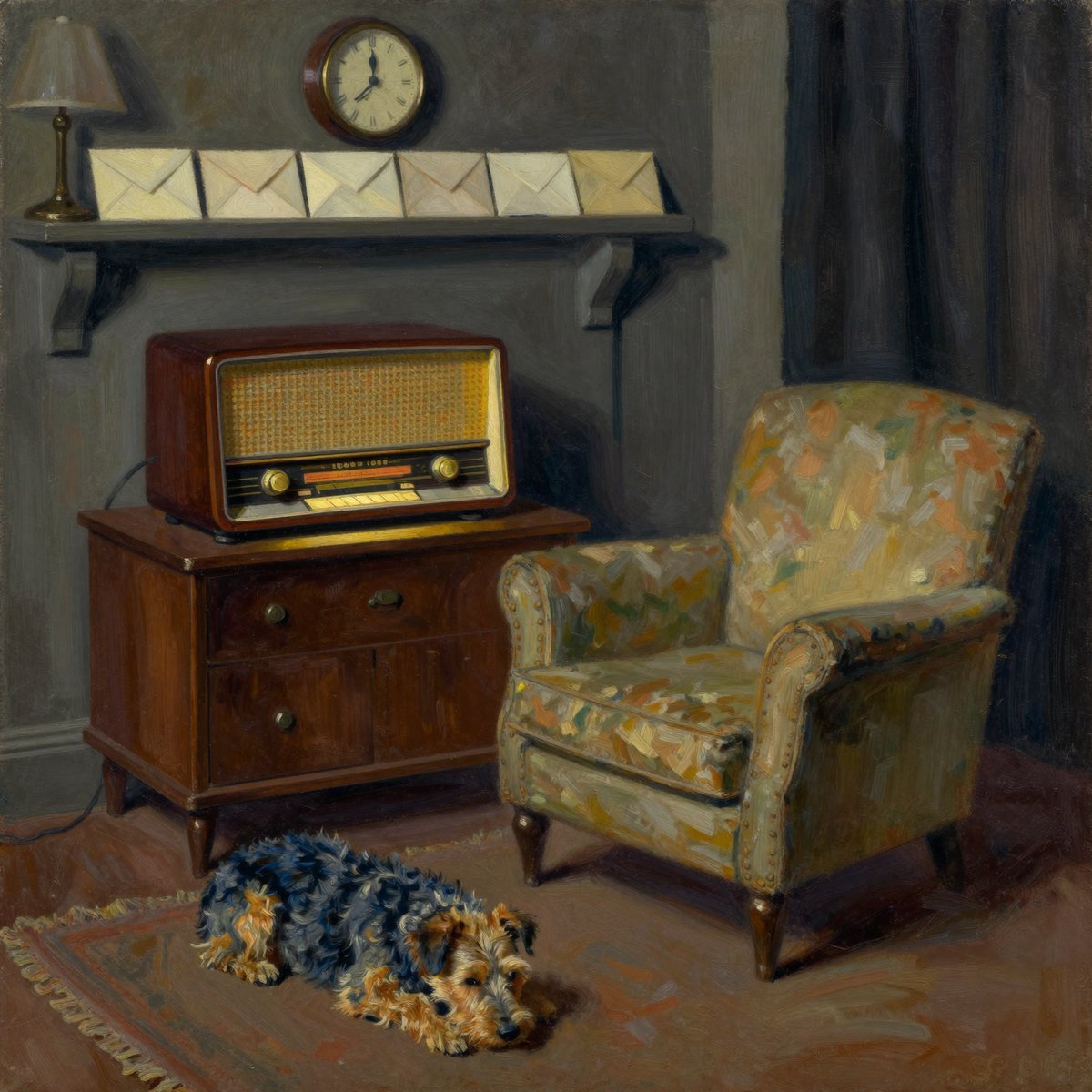
The wireless on, the chair opposite empty, the letters propped against the clock, and a terrier who has decided where to lie. Six books of waiting, in one room.
The cast
Single POV throughout — one recurring sleuth, and a supporting cast the rest of the Bondi universe will grow out of. In brief:
- Dot Campbell — a Randwick primary-school teacher, married to James, and the woman who will one day be Bondi's detective. She has no badge, no agency and no standing. What she has is a place at the centre of a community, and a habit of noticing.
- James Campbell — her husband, an Icebergs club organiser, whose war runs the whole six books in one direction — home, then away, then a telegram with one careful word on it.
- Blue — an Australian Terrier, blue-and-tan, James's pup. He stays when James does not.
- The children — the irregulars. They are not detectives and nobody deputises them; they simply see the whole suburb every day and tell their teacher things nobody thinks to hide from a seven-year-old.
- The universe, in its youth — most of the recurring Bondi cast turn up here as their younger selves — the young men about to enlist, the vets, the club organisers, the woman with the crosswords. The prose never winks at it.
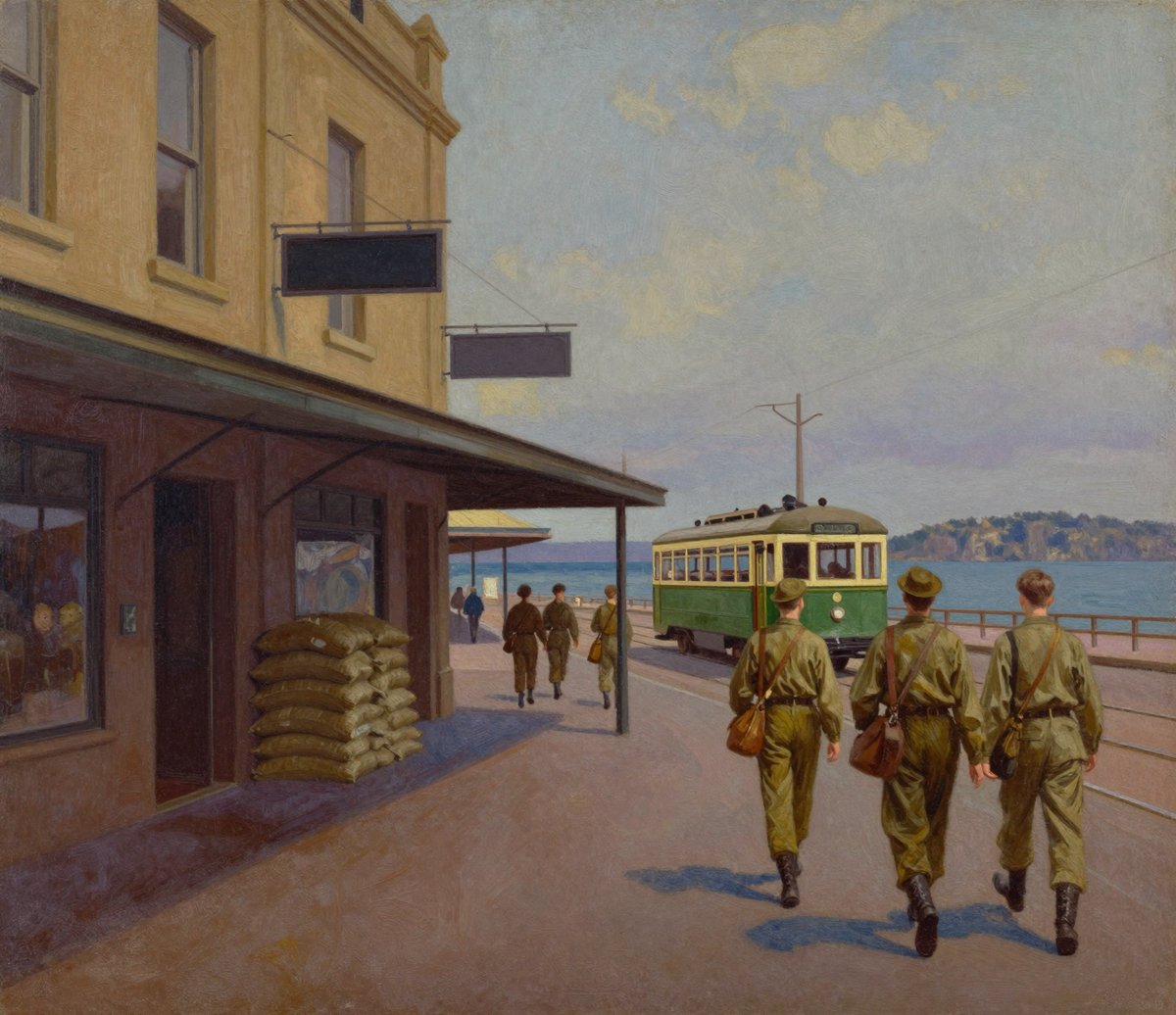
Campbell Parade with the war on: sandbags against the shopfronts, the tram still running, and three more of them walking away from the camera with kit bags.
The rhythm
Six standalone wartime cozies, in calendar order from the last ordinary days of 1939. The puzzles are bloodless and domestic — pets gone missing, forged records, ration coupons, something in the ordinary mail that does not add up — and they are solved by a woman talking to her community and to her class, never by procedure.
Under every case runs Dot's own war, and it does not resolve neatly on a schedule. The tone is warm and the history is kept at the periphery, but the last two books are quieter and colder than the first two, and that is deliberate.

James's club logbook under one lamp: ruled columns of names in his hand, and then the lines that stay empty. Dot keeps it going.
The question the series asks
What do you do with a talent for noticing, in a time when everybody is trying not to?
Where to start
These run in calendar order across the war years and Dot changes across them, so read them in order. Each case is complete in itself.
- The Missing Pets — start here. The last ordinary days before it all begins, James still at home, and neighbourhood pets disappearing one by one.
- The Last Summer
- The Forged Books
- The Quiet Homefront
- The Code Room
- The Homecoming — the capstone, and the only one of the six that is about waiting rather than solving.
Chronologically this is the earliest Bondi series of all. It runs straight into The Bondi Tales, and from there into The Bondi Community Detective Agency.