Sussex Inlet, 1946–1950
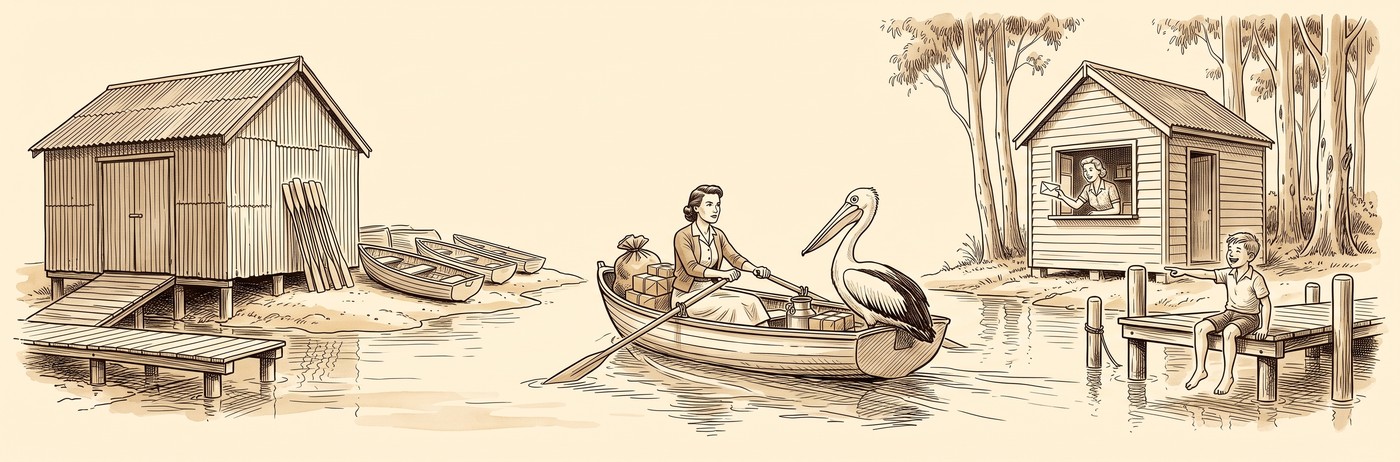
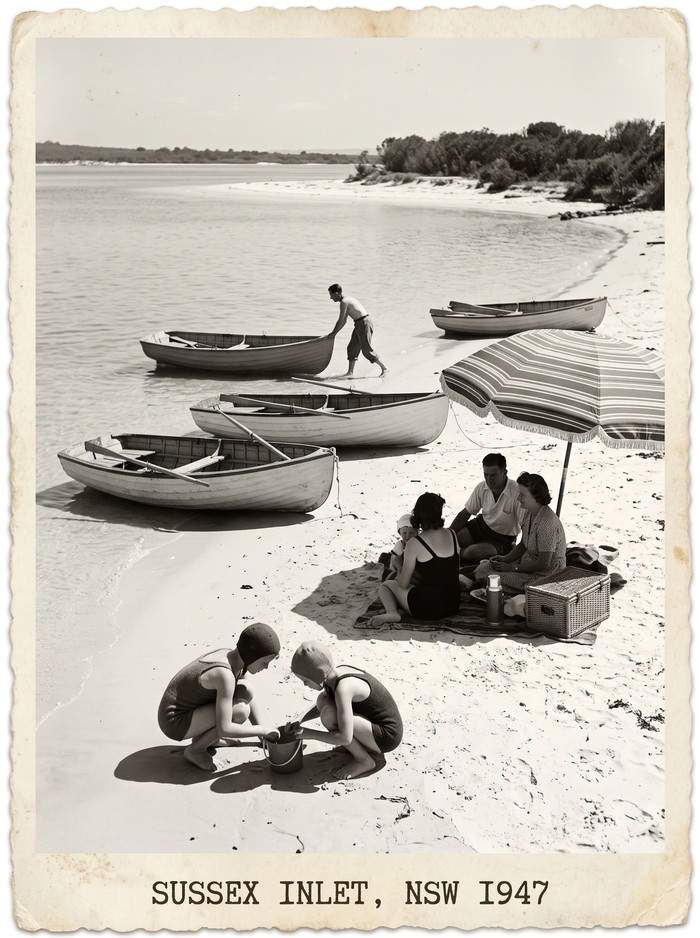
A drowned river runs from the sea up to St Georges Basin, and the village sits on its south bank: eleven families, a post office with a manual exchange, a general store, two guest houses, a boatshed, and no sealed road in or out. In summer a hundred and fifty holidaymakers arrive, and the season is thin enough that everybody counts them.
The professional fishermen camp down toward the mouth, where they have been the longest and own the least. The water is the main street, a line drawn across the inlet in 1915 still decides who is allowed to investigate what, and the nearest sergeant is hours away on an unsealed road.
One village, one narrator
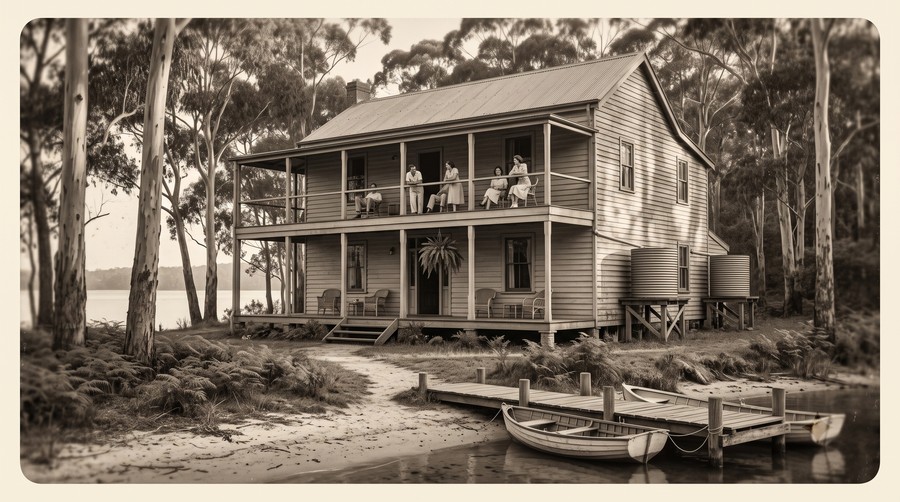
Williamina “Mina” Tait comes home to run a guest house, a boatshed and a cafe counter that she does not own: her father was lost at sea, probate is pending, and every creditor in the district knows it.
Four mysteries, one village of fifty people, and a tide table that decides who could have been where. The cost of solving anything is that you go on living next door to the answer.
The compendium
The three coasts, series by series: the places, the years and the people these books keep returning to.
Start with Mina
Blue's Bondi Beat — twelve dog's-eye shorts that tour the whole world — is the perfect way in, free to subscribers on release.
Meet Williamina Tait →