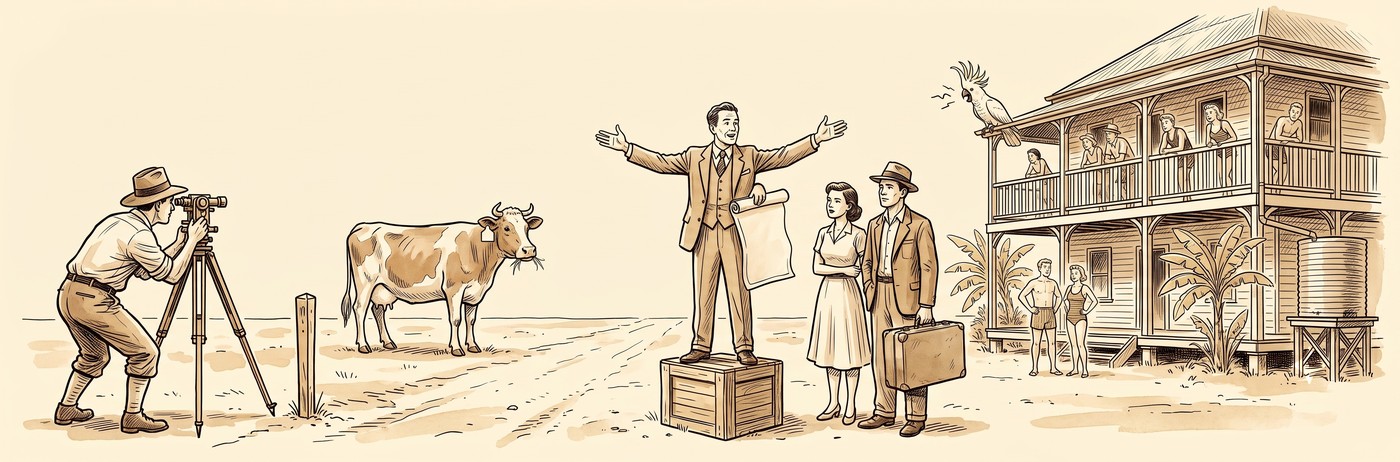
The South Coast, 1946–1956
In 1946 there was no Gold Coast. There was Elston, which the council had renamed Surfers Paradise thirteen years earlier to match a publican’s hotel, and which a good half of the district still declined to call anything of the sort. There was Southport up the road, a strip of sand the Brisbane papers filed under the South Coast, and a two-storey brick hotel with a small zoo behind it that had just had an army through it. Unsealed roads, vacant blocks at six hundred pounds, and a river running behind the beach through mangrove and sand flat with not one canal cut into any of it yet.
Then the men came home, the surveyors came down from Brisbane, and everybody set about working out what the place was worth before anyone had decided what it was for. That question runs for ten years, 1946 to 1956, and these are the books that follow it: warm mysteries about ordinary people holding on to something unfinished against people who have already priced it. There are deaths, and they happen off the page and without blood; the danger here is weather, tide, money and being noticed. Change is the subject rather than the villain. The strip really does arrive. What the books are interested in is who decided, who profited, and who was never asked.
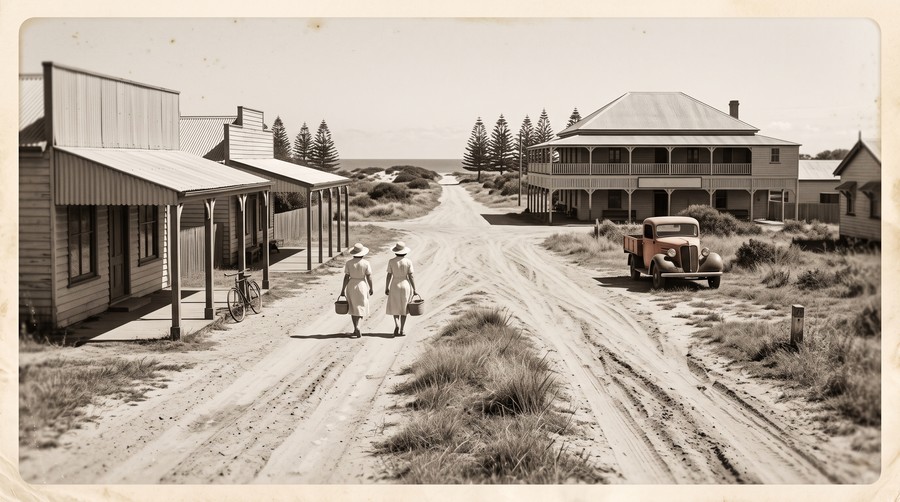
Same coast, different lives
Two lines share this coast, and they do not share a cast the way a crossover series does. The Surfers Paradise Mysteries are one woman’s ten years. Ottilie “Tilly” Sommerfeld arrives with no papers, no schooling and eleven pounds, and lives aboard her dead father’s houseboat on the Nerang. Twenty-four self-contained cases, one continuous ambition underneath them, and a house of her own at the far end of it. Every book closes; the woman does not reset.
Elston Origins runs the other way. The people Tilly comes to depend on were all here before she was, and the six short stories are theirs: one each, in their own voice, somewhere between 1935 and 1945, and not one of them turns on a death. Start with either line. What the two have in common is not a character who wanders between them. It is the coast, which alters more across these twenty years than any of the people do, and the hotel the town was named after, where most of what happens to them is decided by somebody else.
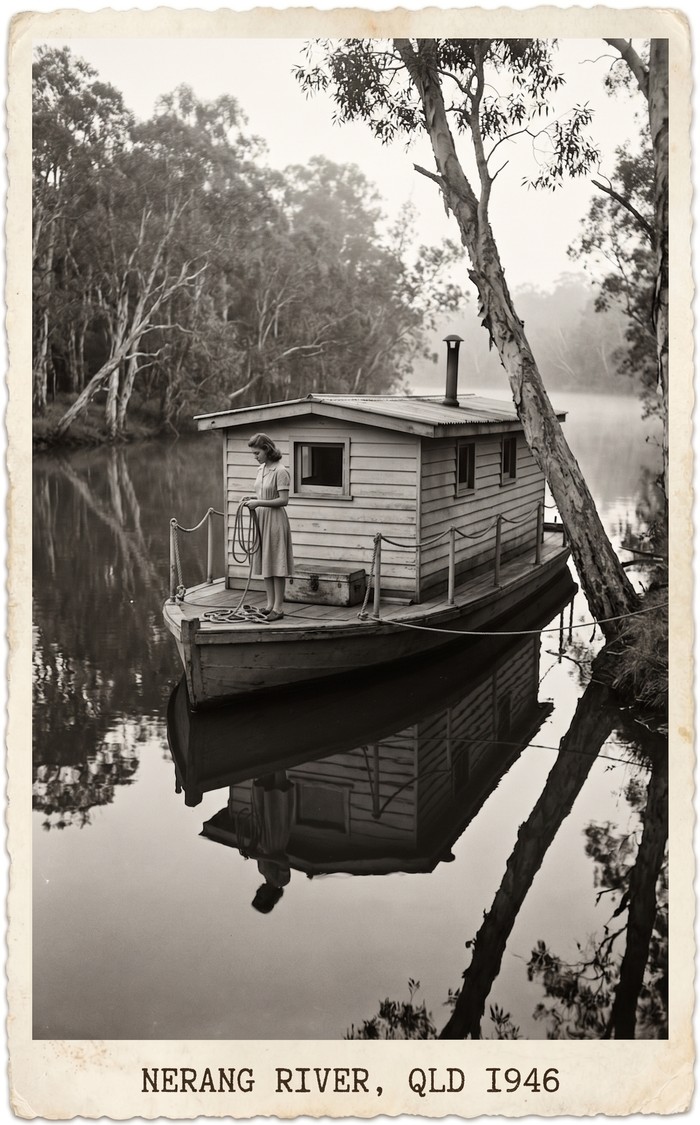

The compendium
The three coasts, series by series: the places, the years and the people these books keep returning to.
Start with Tilly
Blue's Bondi Beat — twelve dog's-eye shorts that tour the whole world — is the perfect way in, free to subscribers on release.
Meet Tilly Sommerfeld →