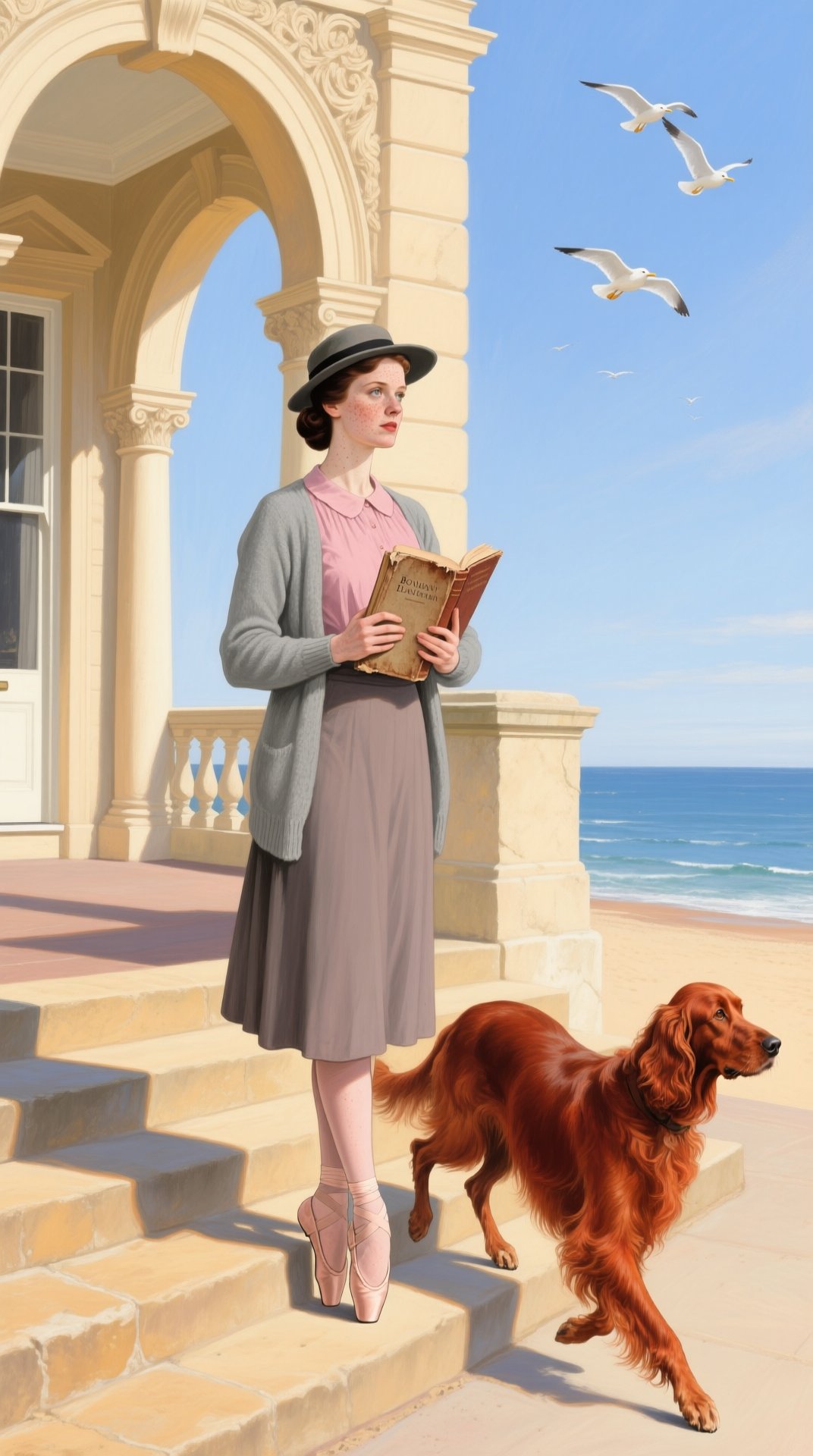
Between the two jobs: the Pavilion steps, a book she has not opened, and a setter who has already decided which way they are going.
The patch
One converted back storeroom behind a family shop: a barre, a gramophone with a worn patch near the end of the first movement, six pairs of Sunday shoes on floorboards that have held a thousand. The plaster lets go from the cornice in a slow dry snow. There is a soft place near the centre of the room where the joist has gone.
It was her mother's studio and it is Siobhan's now, or the bank's, depending how you look at it. Out the door the patch is small and walked daily — the Pavilion where she also teaches, the library where the answers are filed, the parish that knows everybody's business, and the promenade in between.
The set
- The Murphy studio — the converted back storeroom of her late parents' shop; mortgaged, beautiful in the morning light, and quietly falling down.
- The Bondi Pavilion — a separate venue and a separate income — the ballroom, the side door on Thursdays, and every rumour in the suburb arriving by tea urn.
- Waverley Library — where Eilis works and where a question that cannot be asked aloud gets answered from a bound volume instead.
- The parish — Mass, the hall, the socials, and the particular Irish-Catholic arithmetic of whose family did what to whose in 1931.
- The beach foreshore and the promenade — the ocean before breakfast, and the walk on which somebody always falls into step beside her with something to say.
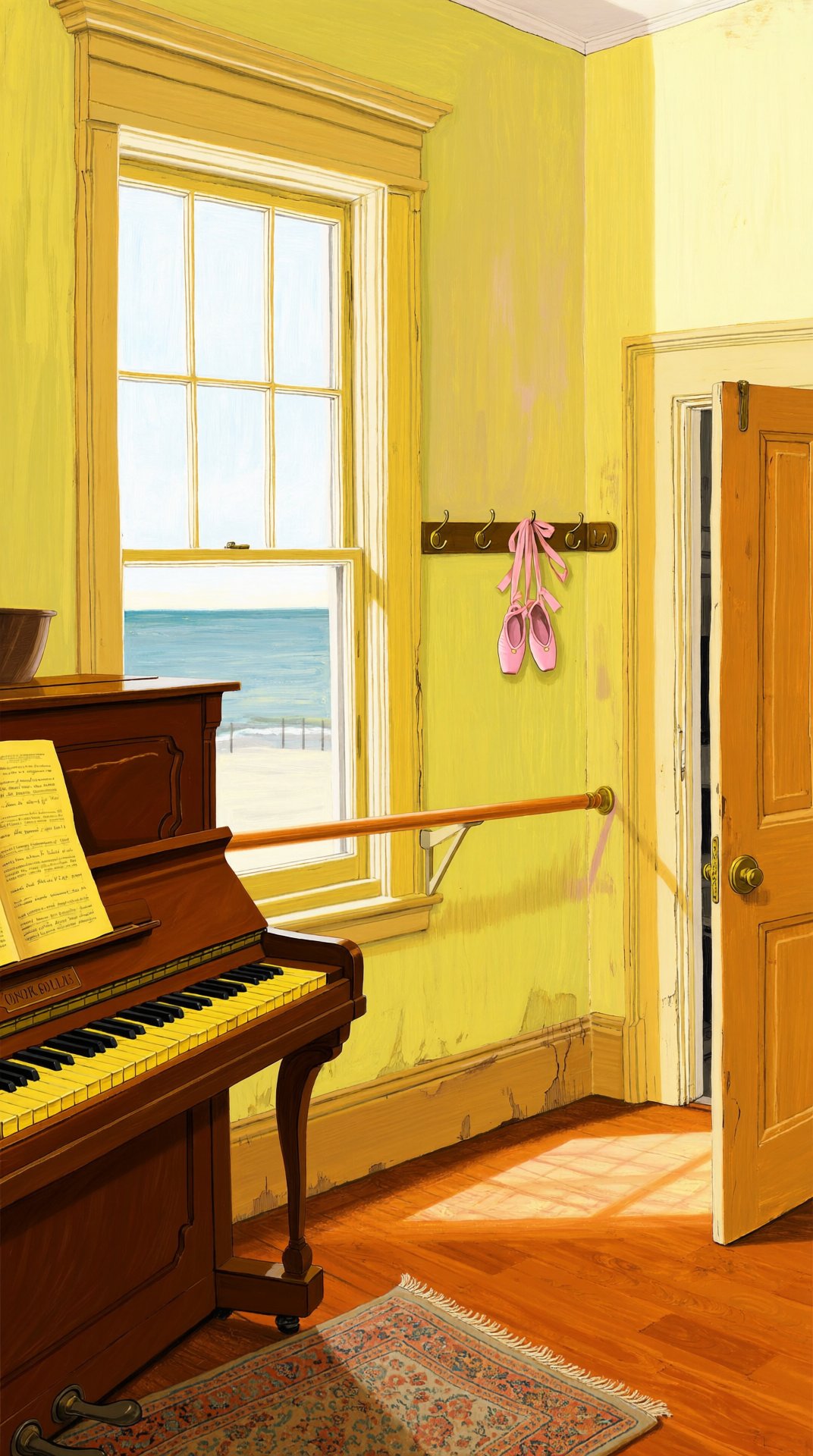
Pointe shoes on the hooks, the sea in the window, and a skirting board that tells you what the building is doing. She sweeps this corner before every class.
The cast
Faces and full introductions live on the roster sheet — [Meet the Locals](siobhan-meet-the- locals). In brief:
- Siobhan Murphy — twenty-two, Irish-Australian, teaches ballet and keeps the books for half of Bondi. Rare fluency in coupons, quotas and allocations — which is why the sums that don't quite sum come to her.
- Rory — an Irish Setter who has never once done the thing she asked at the moment she asked it, and sheds copper hair across every black skirt she owns.
- Eilis O'Connor — the Waverley librarian with a limp and an encyclopaedic memory; asks the question Siobhan was being too polite to ask.
- Dermot Callahan — calls on Wednesdays with his hat in his hand and a future in mind that has her in a kitchen. He is kind. He is steady. He would like her to stop.
- The round — the Pavilion caretaker who unlocks the side door, the dressmaker, the shopkeepers, the dance mothers — the word-of-mouth that is the whole of her practice.
- Dot Campbell — from the Agency books, sixteen years older and a different circle; turns up occasionally with a word of advice and no interest in taking over.

The end of a working day that had three jobs in it. Half of what Siobhan learns, she learns on a doorstep with the light going.
The rhythm
No body, ever. The harm here is human-sized and always personal — a theft, a blackmail, a long- buried arrangement — and what is at risk is a livelihood, a reputation, a student's future. Intimidation is allowed on the page; wounds are not. The romance runs inverted: the suitor is the obstacle, and what the books are building toward is Siobhan choosing herself rather than being chosen. Elegant, murder-free, and funnier than the money would suggest.
The question the series asks
Who is the studio for — her parents, or her?
Reading order
Each mystery stands alone, but the money gets worse before it gets better and the courtship comes to a head in the middle books, so the order rewards you.
- The Pavilion Pilfering — start here. Coupons, sugar, a floor that will not hold, and the first time anyone asks her to work out who.
- The Waverley Correspondence
- The Recital Caper
- The Bondi Arrangement
- The Dancer’s Dilemma
- The Solo Dance
- The Rafferty Bequest
- The Murphy Method — the last one; the biggest case, and on her own terms.