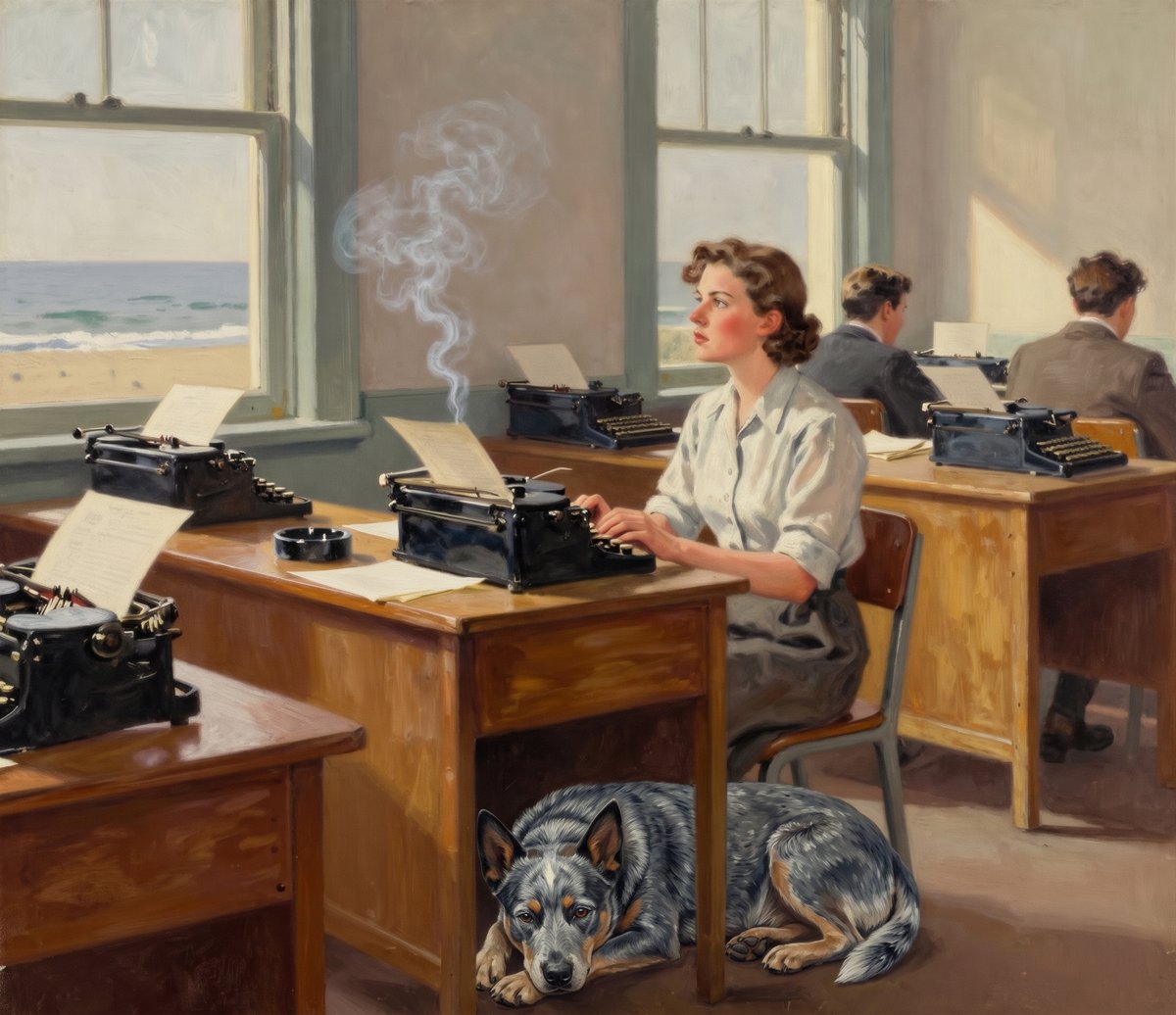
Late afternoon at the desk third from the window that sticks: the machine, the smoke, the grey sea nobody has time to look at, and a dog who has decided this is his office too.
The patch
A small local paper on Campbell Parade, and one desk in it: third from the window that sticks, a blue cattle dog asleep underneath. Frankie Morrison was hired during the war because there was nobody else, and now the men are back and the arithmetic is supposed to be obvious. She is not clearing the desk.
The patch runs from the newsroom to the composing room and the clippings morgue below it, and then out along Campbell Parade to wherever the story is — which in this series is always somewhere the rest of the Bondi books already live. Every investigation here walks into somebody else's series and comes back out with copy.
The set
- The newsroom — typewriter clatter, cigarette fug, hot lead and newsprint, and a grey window onto the sea that nobody looks at. Frankie's desk is third from the one that sticks.
- The composing room and the morgue — inky and cramped, the presses shaking the floor above, and downstairs a wall of pigeonholes full of every word the paper has ever printed. Half the work is done here.
- A cluttered flat with the kettle on — crosswords, dog hair, and a woman who compiles the paper's cryptics and answers questions with better questions. A source, of a kind.
- The dawn foreshore — winter swimmers, dog-walkers and the running regulars before six. Frankie's human-source network is out there and it does not know it is a network.
- Campbell Parade and the tram — the beat: the milk bar, the shopfronts, the salt wind, and the tram that gets her to wherever the paper will not pay for a taxi.
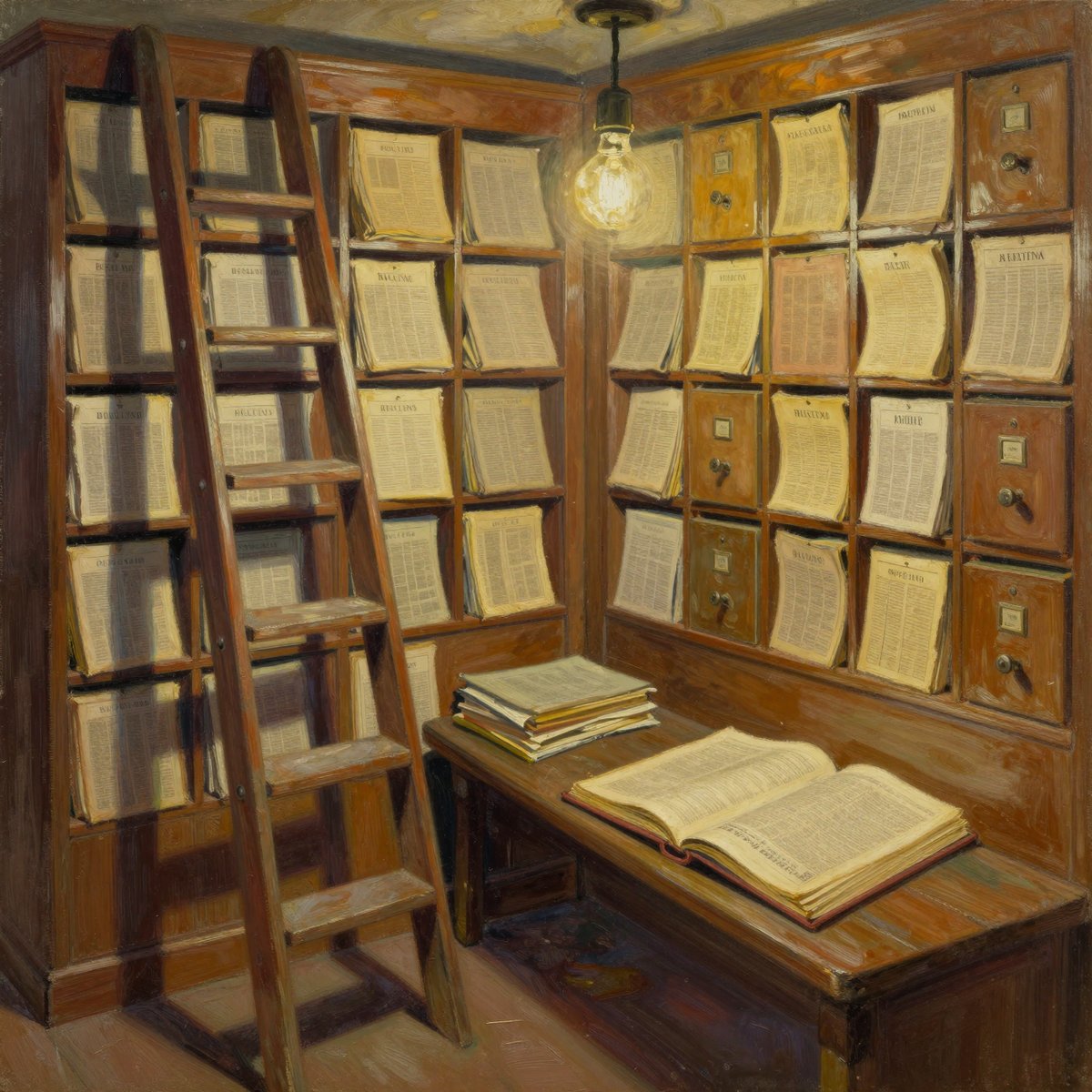
The clippings library under one bulb: every word the paper has ever printed, filed by somebody who is no longer here to explain the system. Half the work happens down here.
The cast
Told throughout in one voice, Frankie's. In brief:
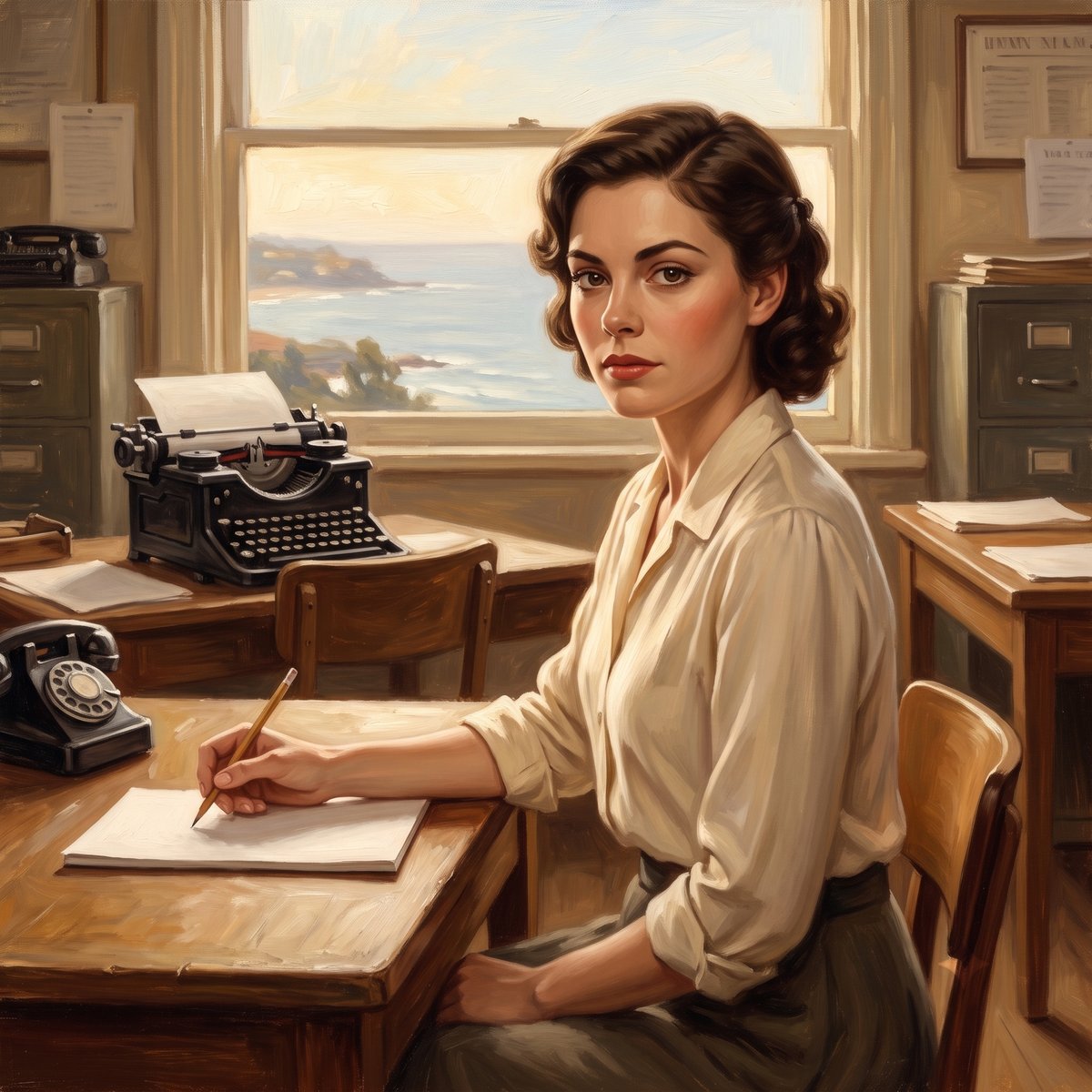
Average height; brown hair pinned practically; brown eyes; sharp in the way that gets remembered.
twenty-two, a wartime-hire junior reporter, and better at the job than anyone intends to admit. Competence is her armour, and the six books are about discovering that being good at the work is not the same as being good at being a person.
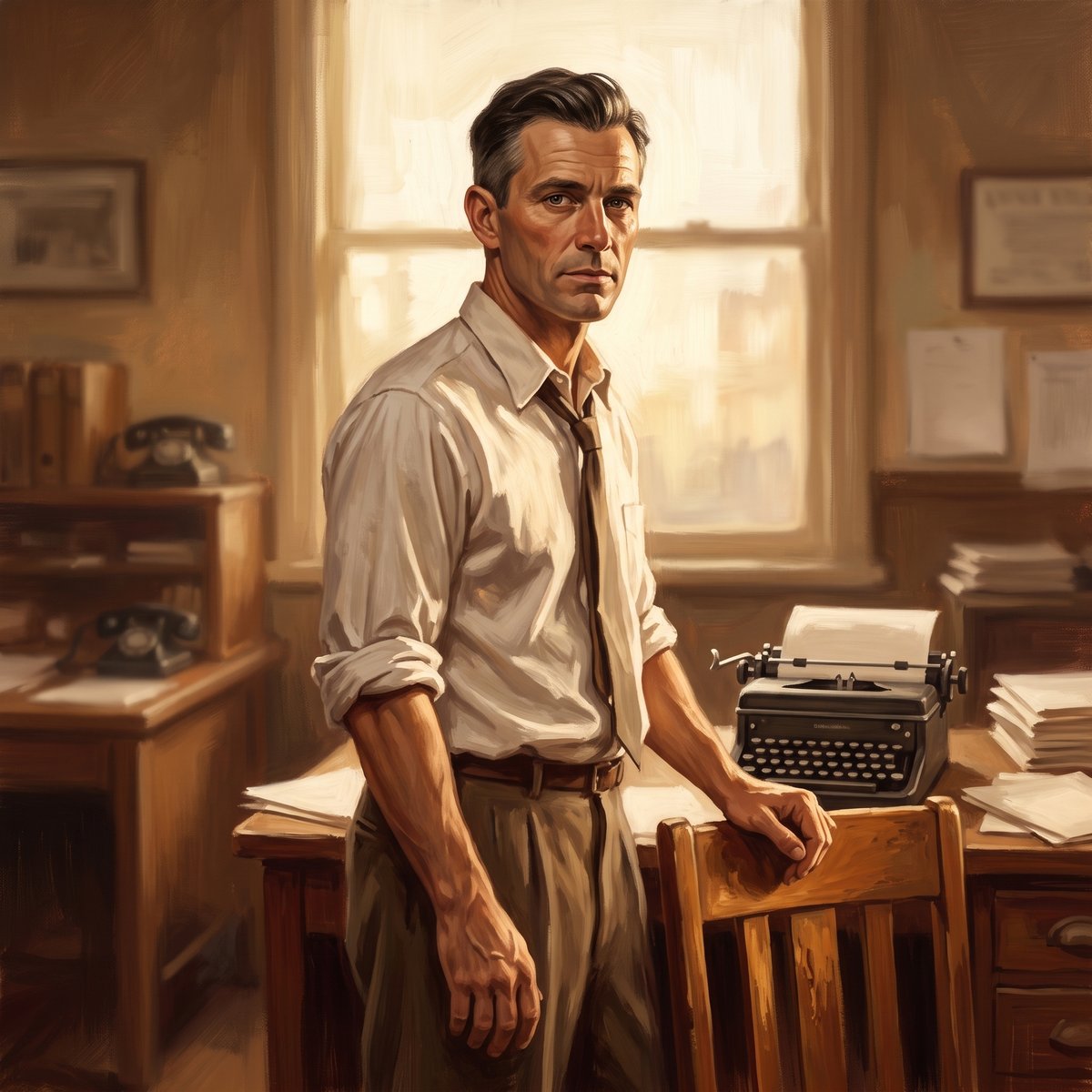
Surf-beach shoulders come back narrower but not soft; grey eyes.
a returned Pacific war correspondent who walks in on page one and tells her to clear her desk. He is not wrong about the paper and he is wrong about her. A tremor in his left hand that he would rather you did not notice.
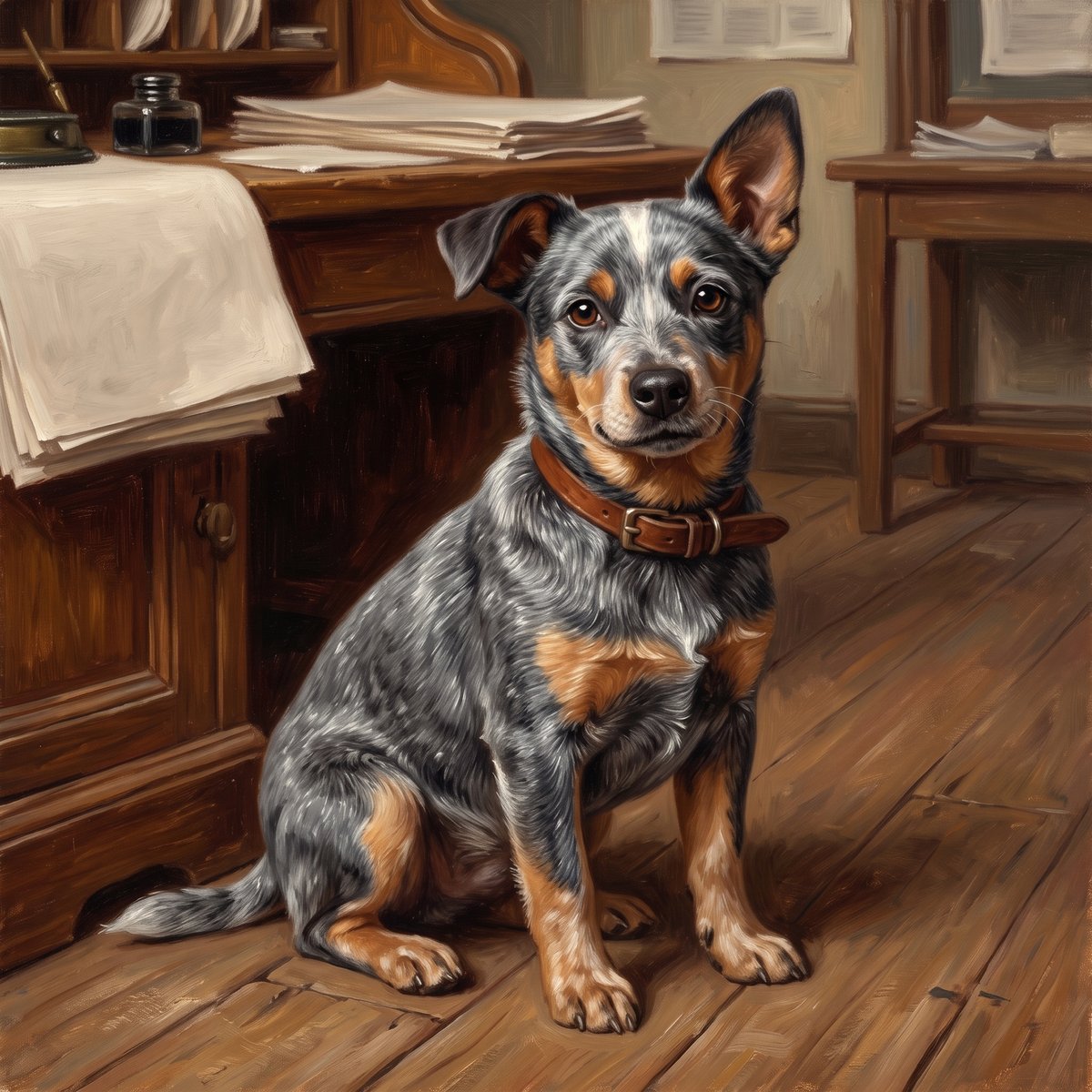
Runt cattle dog; one ear won't stand; off-centre white blaze; blue/speckled coat.
a blue cattle dog — mottled blue-grey ticked with white, tan points, and a habit of walking across wet copy, which is how he got the name. He sleeps under the desk.
- Vance and Morrow — the editor and his deputy. Neither of them will ever say "good work"; the next assignment is the compliment, and Morrow hands her "women's interest" knowing exactly what she will find in it.
- The rest of Bondi — each book's story runs into another series' patch, so the sources are people you may already know — a swimming club, a dog-walker, a guesthouse, a widow with a network, a woman who sets the crosswords.
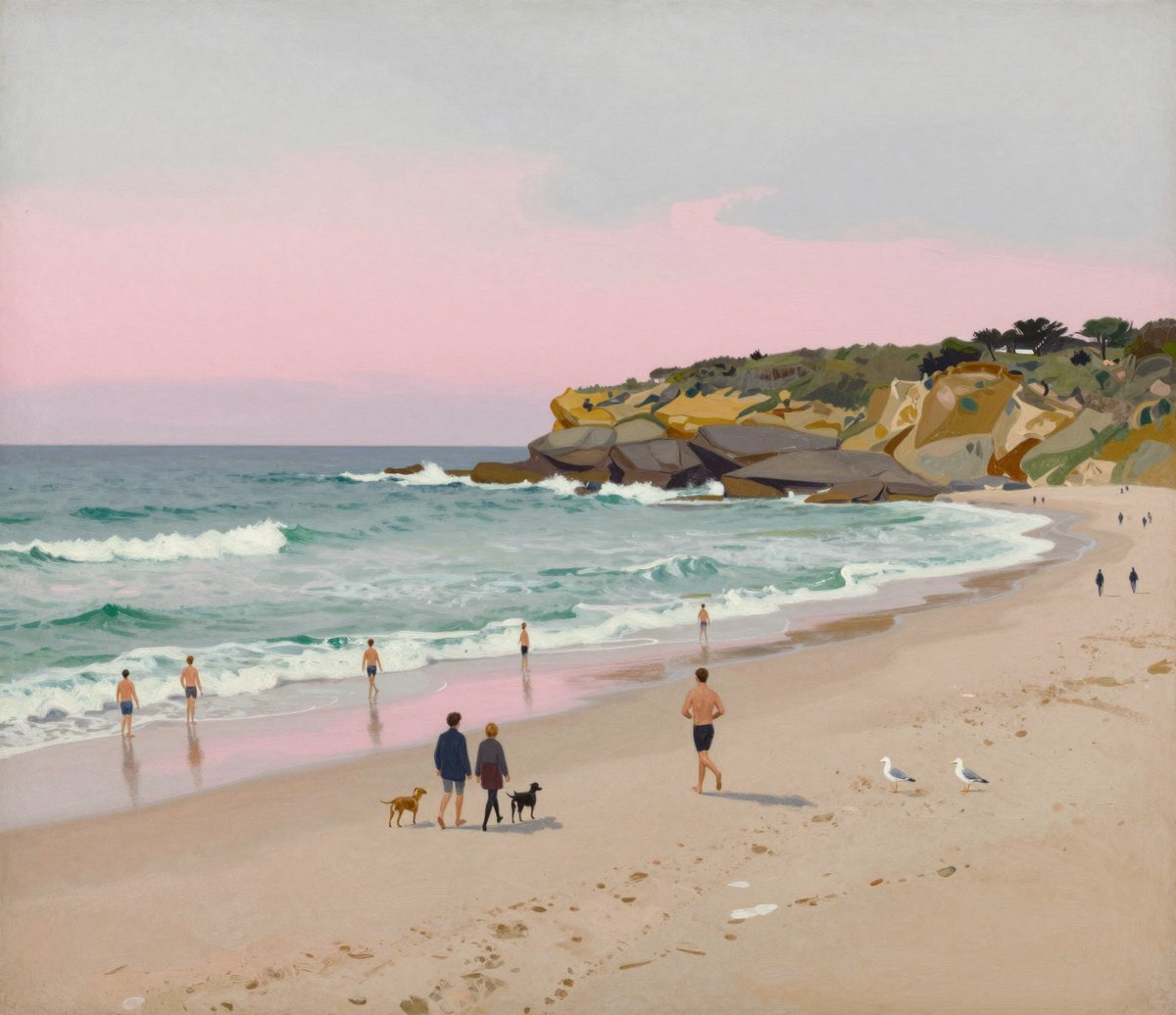
The beach before six: swimmers, dog-walkers, the running regulars. Frankie's best sources are all out here and not one of them thinks of themselves as a source.
The rhythm
Six books, one major story each, and the structure is investigative rather than criminal: Frankie is handed something trivial, finds the real angle underneath it, and has to get it past the people who would rather it went away. Rigged competitions, altered records, a zoning change with one word swapped, a case the police have the wrong way round.
Underneath it runs a slow burn from rivalry to partnership, and a harder question than the romance: whether a woman in 1947 can build a career that cannot be taken off her. The answer is not assumed, and the marriage bar is a real obstacle rather than a period detail.
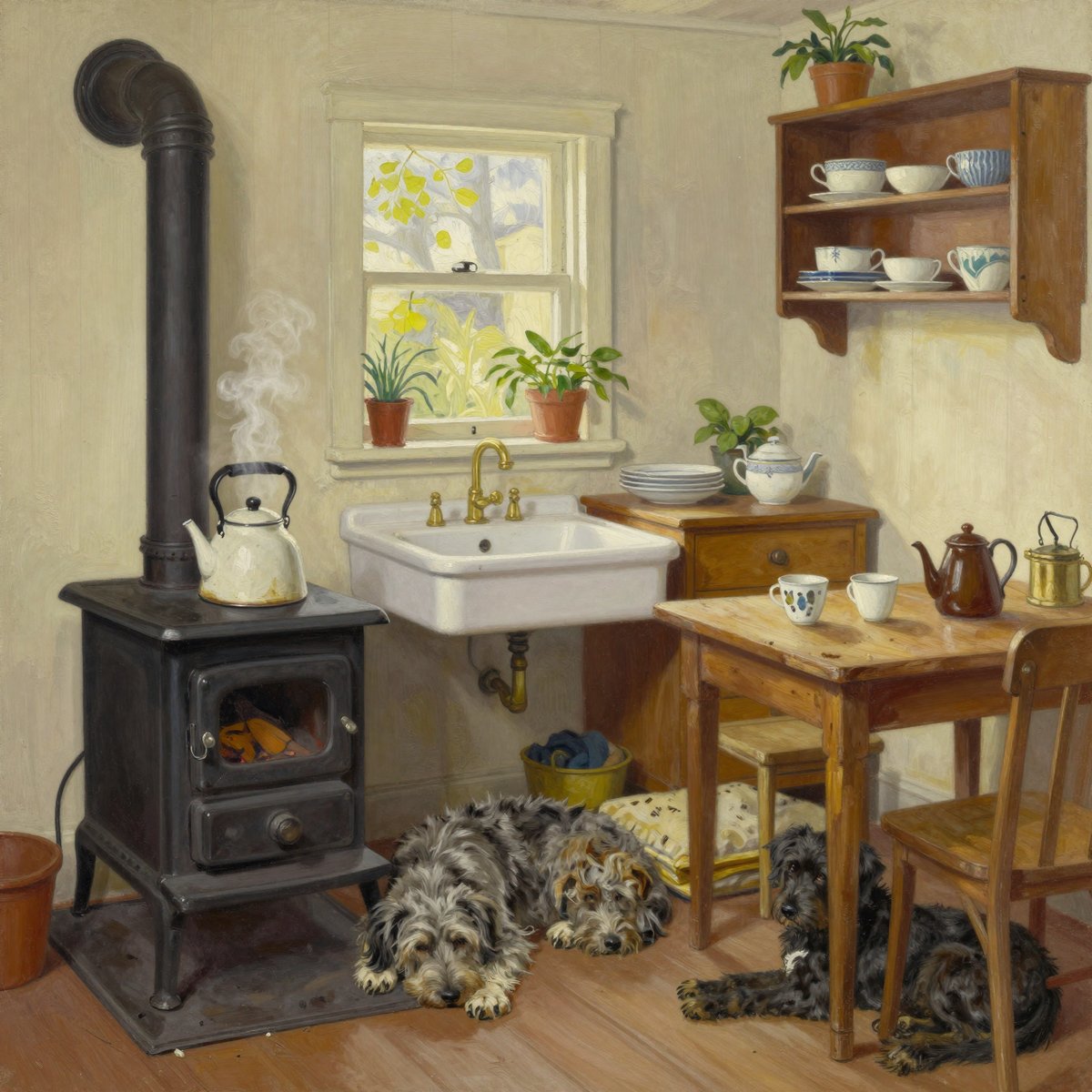
The kettle near boiling, two cups already out, dogs underfoot and nothing explained. Some of what Frankie learns, she gets here, sideways, from someone who answers a question with a better one.
The question the series asks
What is a byline worth, if keeping it costs you everything it was for?
Where to start
Each story is complete in itself, but Frankie's standing at the paper and her relationship with Jack both move in one direction across the six, so the order pays.
- The Opening Number — start here. A ballet recital handed over as "women's interest", a rigged competition underneath it, and a man walking into the newsroom to tell her the job is his now.
- The Missing Volume
- The Minute
- The Wrong File
- The False Ribbon
- The Front Page — the last one. A marriage the paper wants to make a scandal of, a man who served without recognition and was never thanked for it, and a reporter who files the human story instead — and bets her job on being right about which one it was.
This series is the Bondi universe's crossing point — each book brushes another series, so it reads well either as a first door in or as the book you pick up once you know everybody.