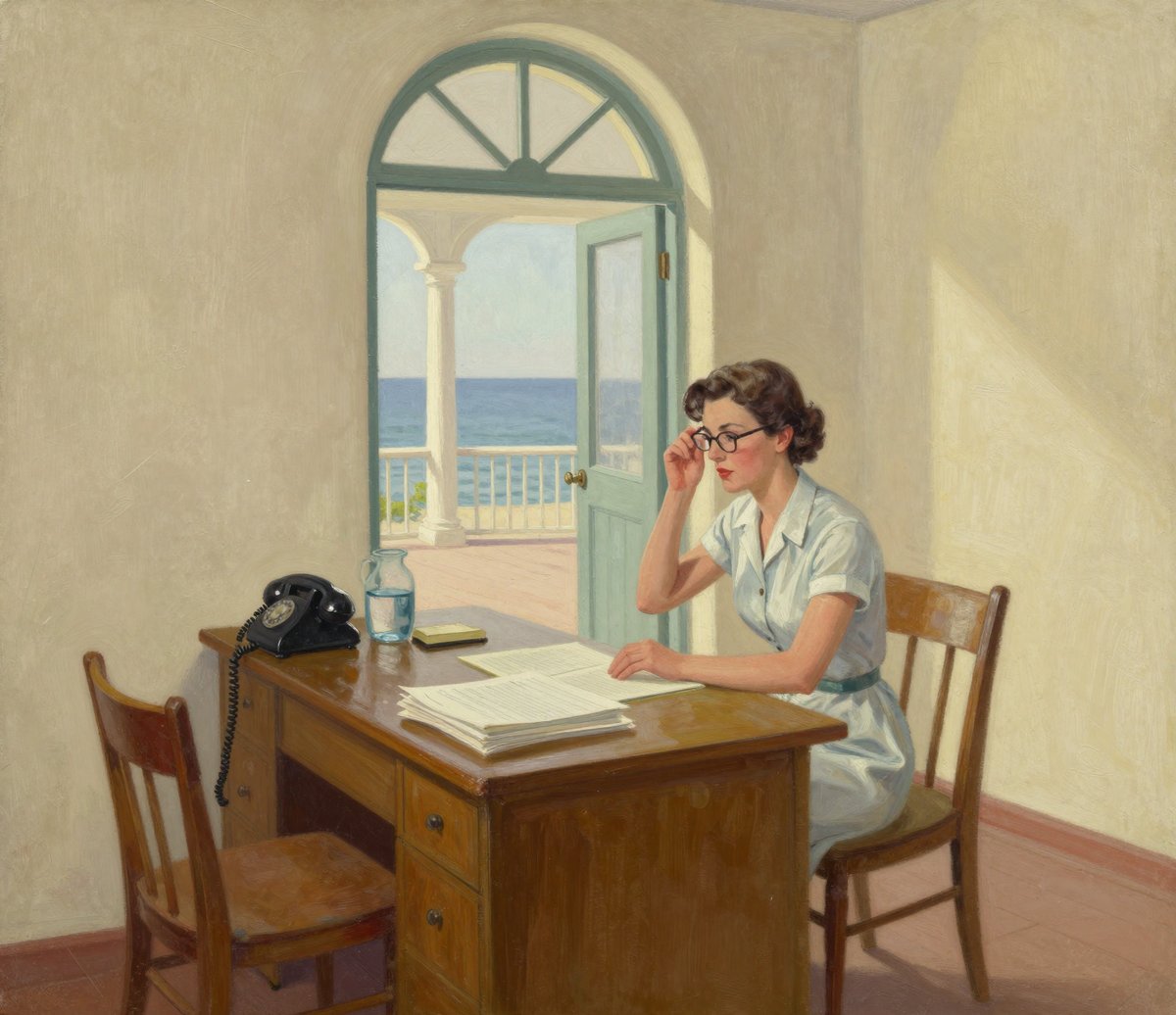
One desk, two chairs, a jug of water and a door open onto the colonnade and the sea. They gave her the store cupboard to keep her out of the way. It put her on the route the whole suburb walks.
The patch
Police work without a uniform. New South Wales women police were plain clothes only until 1948, restricted to women, girls, children and what the era filed as morality and welfare, and Joyce Brennan is the only woman doing the job on the Eastern Suburbs beat. She arrives as a wartime temp typist and is parked at a spare desk in a store cupboard at the Bondi Pavilion — a liaison room nobody wanted, with a standing instruction to be out liaising with the public and nobody watching whether she is.
It is the freest posting in the force disguised as the least important one, and it is her whole method. She is not a paper detective. She works the Kiosk, the lost-property queue, the mothers on the sand, the station lunch room she is invisible inside of, and the dances.
The set
- The Pavilion liaison room — a window painted shut before the war, a spare desk, a stack of women-and-children's forms, and the door the whole suburb walks past.
- The Kiosk at the Pavilion — the suburb's gossip exchange. A woman standing at that counter with a cup of tea is not a policewoman, and everybody talks accordingly.
- The Waverley station lunch room — male-copper chatter she is invisible inside of, and the best-informed room on her beat.
- The studio on Campbell Parade — one room, third floor, walk-up: balcony roses, strong tea, and a dog smuggled past an absentee landlord.
- The beach and the Icebergs pool — where her young-mother informant net lives. The swim is not a break from work. The swim is tradecraft.
- The dance halls — where she works leads, and has the time of her life doing it.
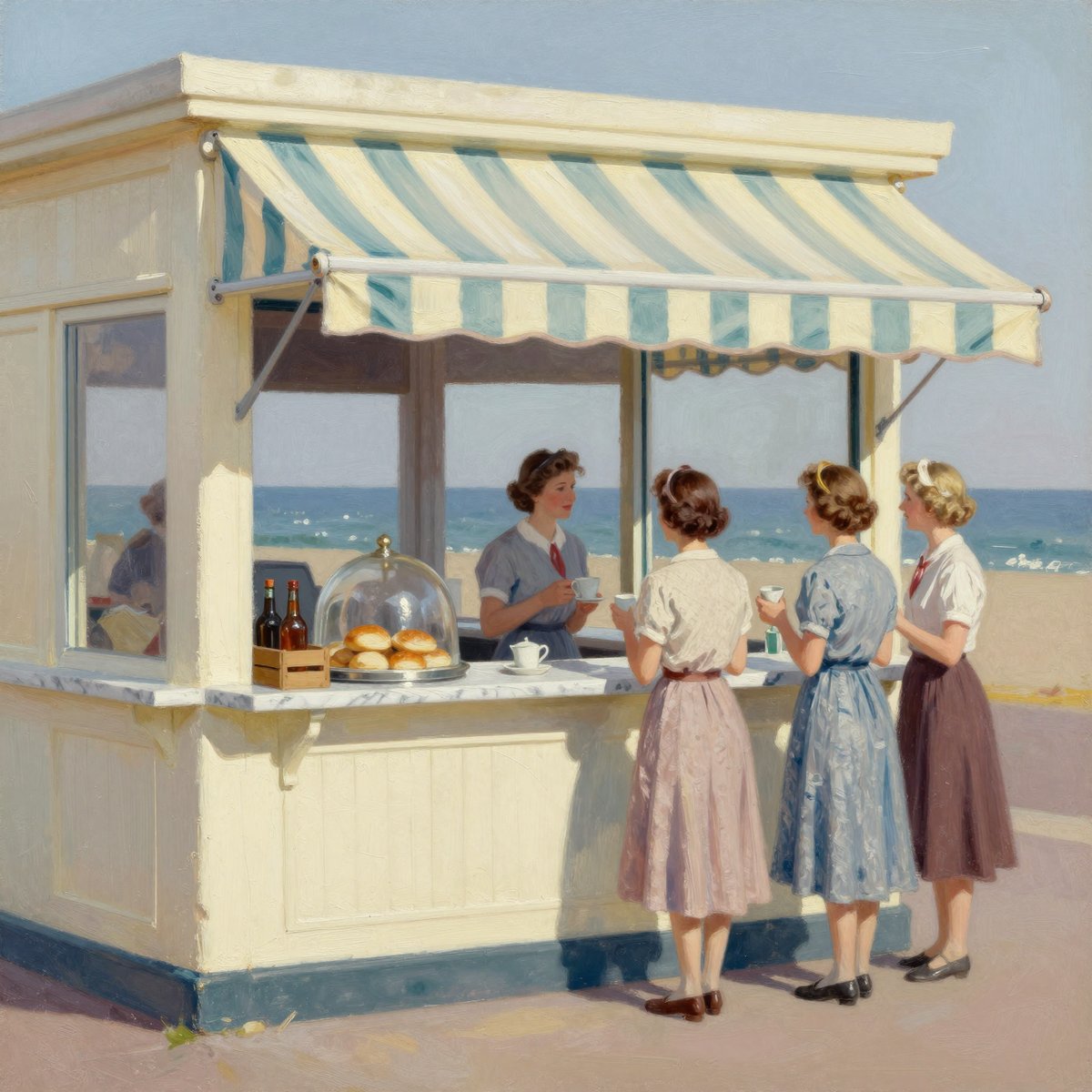
A serving hatch, a tea urn, a glass dome of buns, and four women mid-conversation with their backs to the beach. This is where most of what she knows comes from.
The cast
Told in one voice, Joyce's. The formal register is armour. In brief:
- Joyce Brennan — late twenties, a swimmer's trim build, dark hair pinned up to type and loose at the beach, reading glasses pushed up onto her head when she is sizing you up. The least threatening person in the room and therefore the most dangerous one in it, working to an ethic she never says out loud: who is hurting society, and who society is hurting.
- Marion Gault — the senior policewoman at Waverley — fifties, spare and upright as a closed door, iron-grey hair scraped back hard, a stare that outlasts any lie. She came first, broke on the same machine, and lost a case of exactly this kind.
- Gunner — a big ex-service Alsatian, black-and-tan over a lean working frame, one ear notched, still moving like he is on duty. Nobody wanted a killer dog. He finds people and guards them, and never once solves anything.
- Iris Selby — the station typist, and Joyce's eyes and ears inside the building. Her own problem is the marriage bar: to marry the man courting her she would have to resign.
- Horace Vellacott — the liaison officer who dumped the worthless Pavilion room on her, and wants it back the moment it draws attention upstairs. Ambitious in the laziest direction available.
- Ray Kearney — a young Waverley constable with a grin that has talked him out of more trouble than it is worth. One of her beaux and not the one — the love life is plural by design. The job is the thing she is courting.
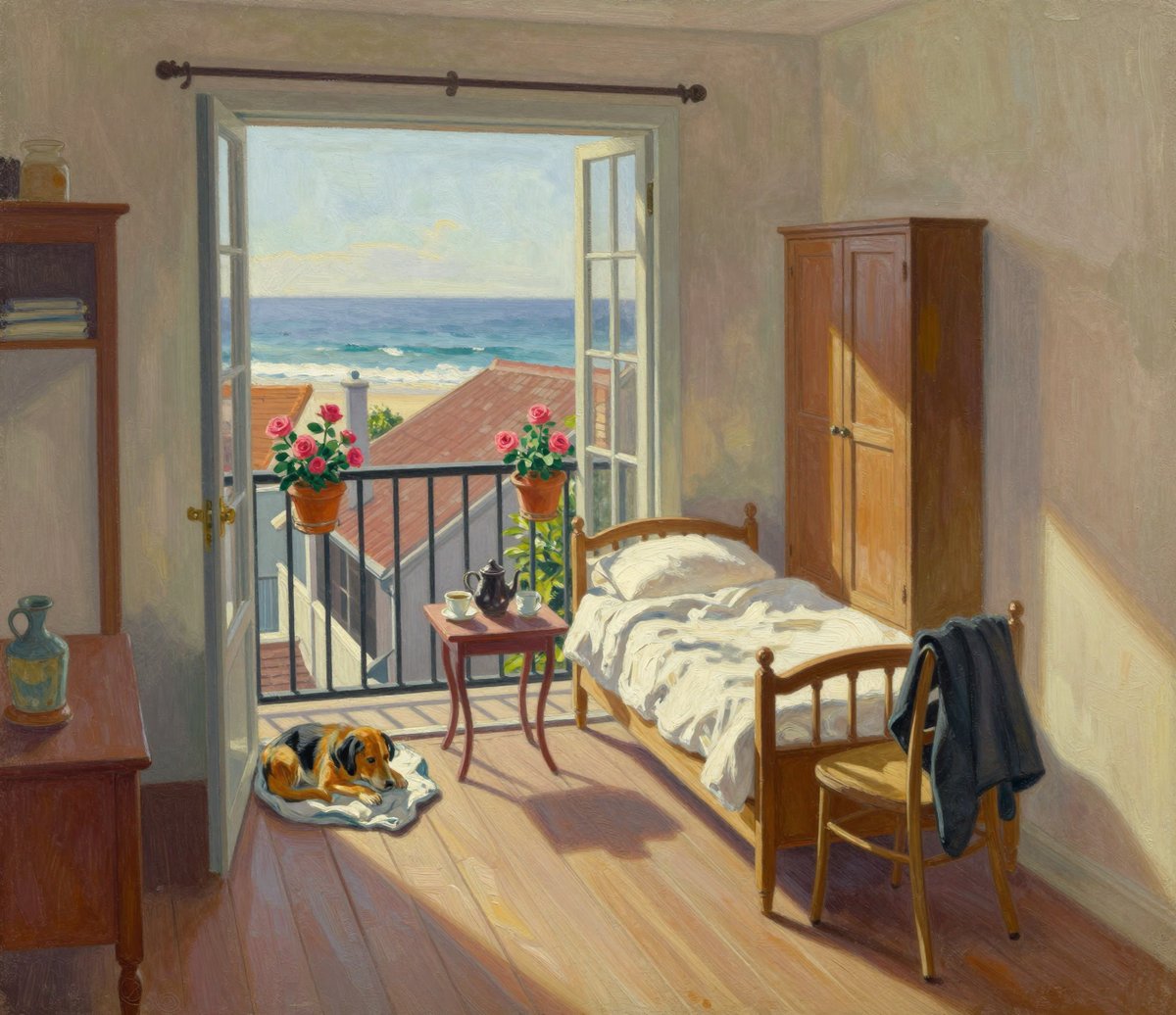
One room, third floor, the bed made up tight and the french doors open onto roses and the ocean over the rooftops. Home is where she goes when she wants to be nobody.
The rhythm
Eight cases, no murders and no bodies. What happens instead is a solvable wrong — four change-room thefts stamped no further action, a frightened woman who needs somewhere to be by nightfall, a baby left with a minder and never handed back — and the detection is people, not paper. Fair play throughout: the reader sees what Joyce sees, and Joyce sees who is lying because she is standing close enough to be ignored.
Warm and funny on top, and hard underneath. A for-profit adoption racket runs out of a hundred-year-old private hospital whose reputation is its armour — planted small in book one and paid off in book eight. Justice lands every book. The light never goes out.
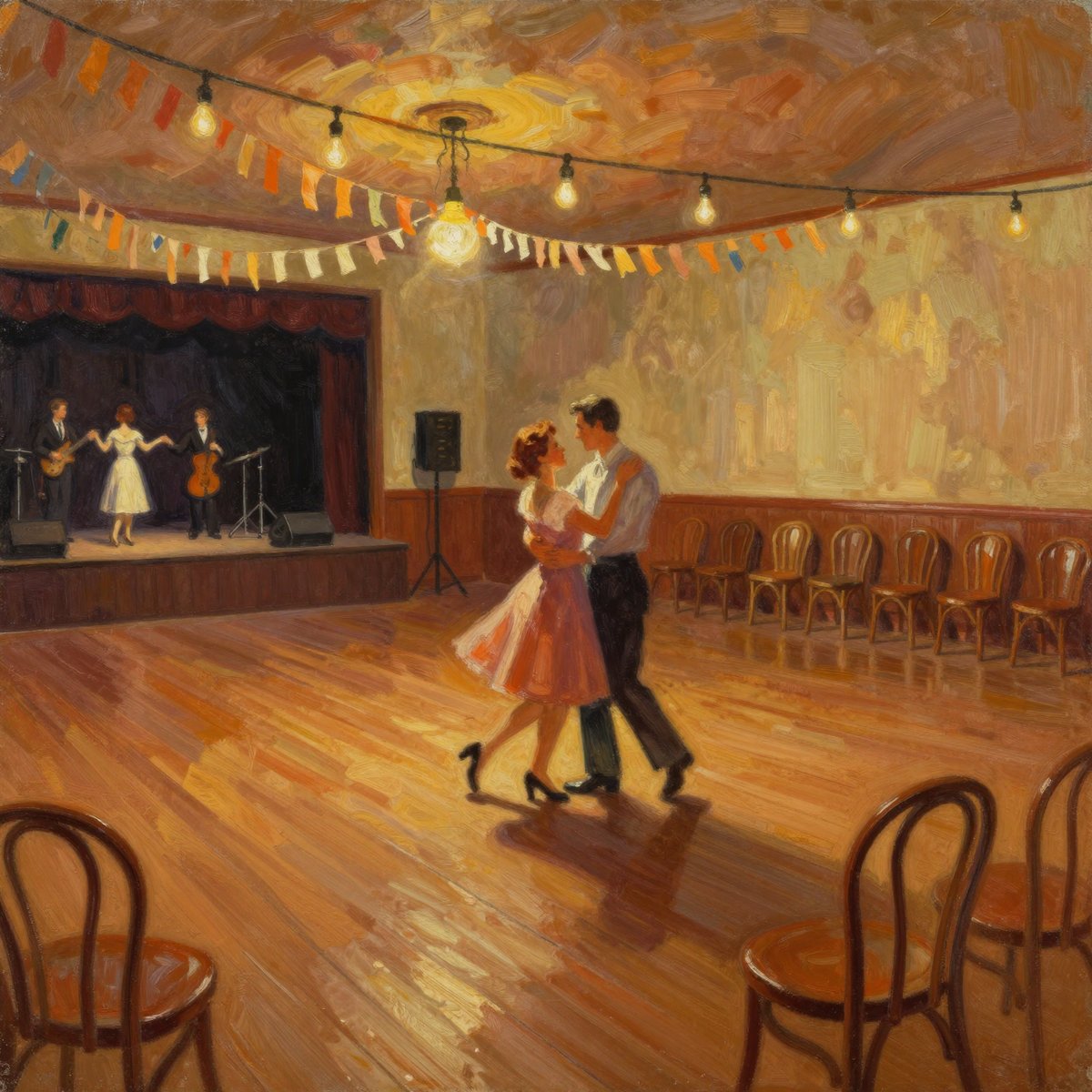
A sprung floor, festoon bulbs, streamers, a band on a low stage and a row of empty chairs along the wall. She is working. She is also, unmistakably, enjoying herself.
The question the series asks
How much can a woman get done from a job nobody believes is a job?
Where to start
Read them in order. The cases stand alone, but the climb runs through all eight and the rule of it never changes: every rung she gains leaves the rung above still shut.
- The Police Typist — start here. 1943. Four change-room thefts stamped no further action, and a widow's wedding ring gone from under a folded towel. Nobody guards their tongue in front of the typist.
- The Change Room — 1944. Sworn in, still given no uniform. A frightened woman needs somewhere to go by nightfall, and a council inspector with a whistle decides her bathing costume is his business.
- The Borrowed Child — 1944. An Italian family will not talk to the police, but they will talk to the woman who went into the surf after one of their own: a baby left with a minder and never handed back, and no paper anywhere to say he was born.
- The Contact Room — 1945. A careerist wants her room back and the paperwork is on his side. All she has to argue with is a case whose witnesses will not talk to anyone official.
- The Credit — 1946. Three weeks of Tuesdays on a black-market ring, caught cold. Then another man's name goes on it, and she hears the applause from the corridor.
- The Photographs — 1947. Somebody has been photographing her for a week, and the pictures go straight to the man who wants her job.
- The Temp — 1947. Six weeks as a temporary typist inside the hospital nobody will investigate. She comes out with it in the hospital's own ink, and learns that proof is not the same as being believed.
- The Uniform — 1948. The proof, and nobody who will touch it. The title is the payoff.