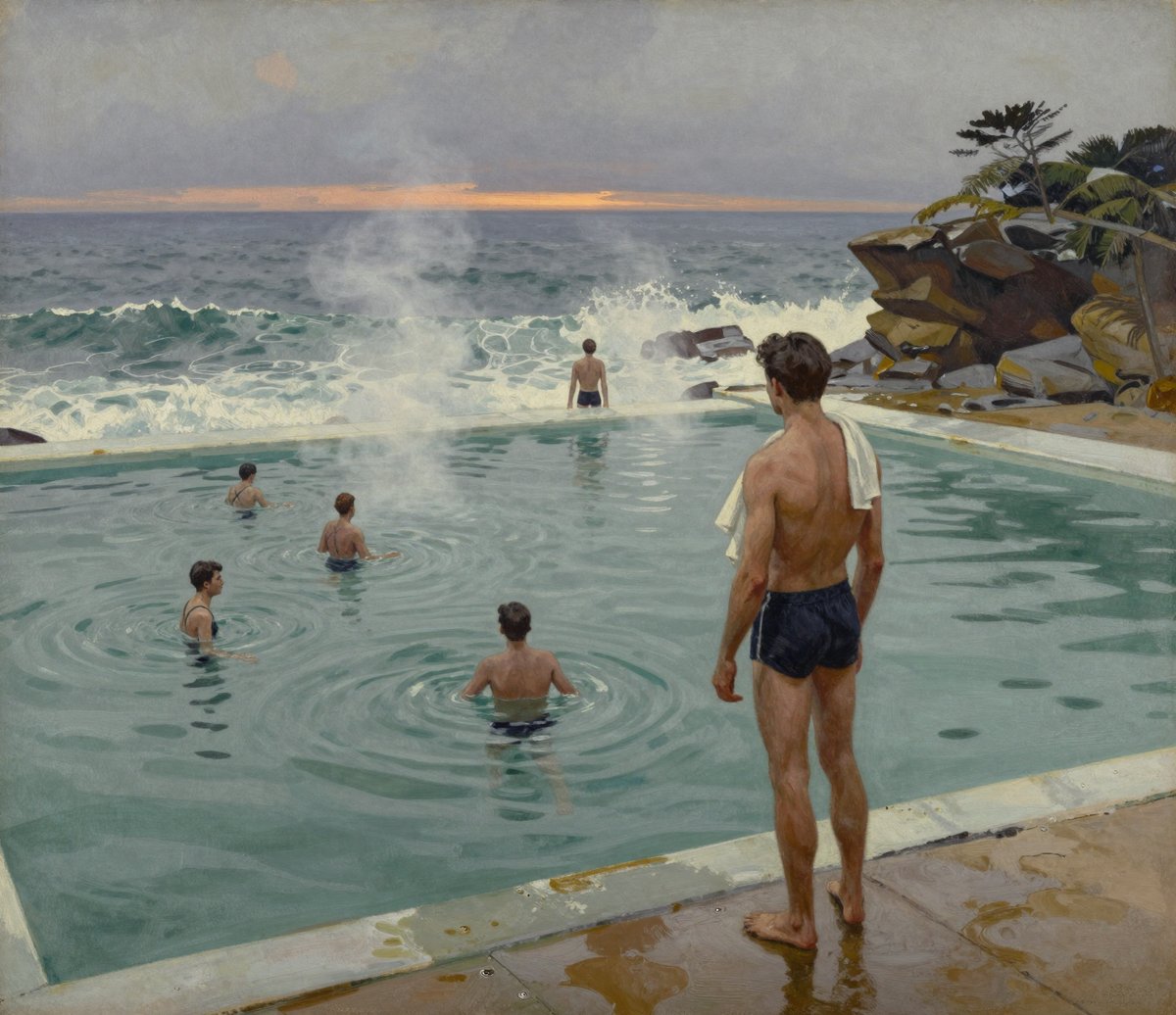
Winter, a little before sunrise: steam off the water, spray over the far wall, the others already in, and Tom Brennan on the edge deciding nothing in particular. Nobody here would describe this as therapy.
The patch
The south end of the beach, where somebody blasted a swimming pool out of the rock shelf and a club grew up around it. In winter the water comes over the wall in sheets and the men get in anyway; that is the whole point of the place, and it is the only thing several of them have found that works.
The building is not much — a clubroom, hooks, a bench, a board by the door — and after the war years it is coming apart, with the council making noises. Everything in these six books happens inside a triangle of the baths, the sea wall and the beach, and the men in it came home from somewhere they will not describe.
The set
- The baths — cold concrete and salt spray, dawn steam lifting off grey water, and by the clubroom door the winter handicap board and an honour board with a name on it that nobody has been able to finish.
- The sea wall and the kiosk — enamel mugs of hot tea, wet towels on a rail, and the men's easy insults, which are the only form of tenderness on offer here.
- The beach — beach cricket on the flat sand in summer, the surf carnival, and the long stretch of ordinary life the winter books keep looking across at.
- Campbell Parade and the tram — the way in and the way out. Book one begins with a man stepping off it in uniform with a kit bag and nothing much in his head.
- The old veterinary rooms — a back room on the other side of the suburb with a surfboard on the rack, gathering dust. It matters more than it should, and it belongs to another series' story as much as this one.
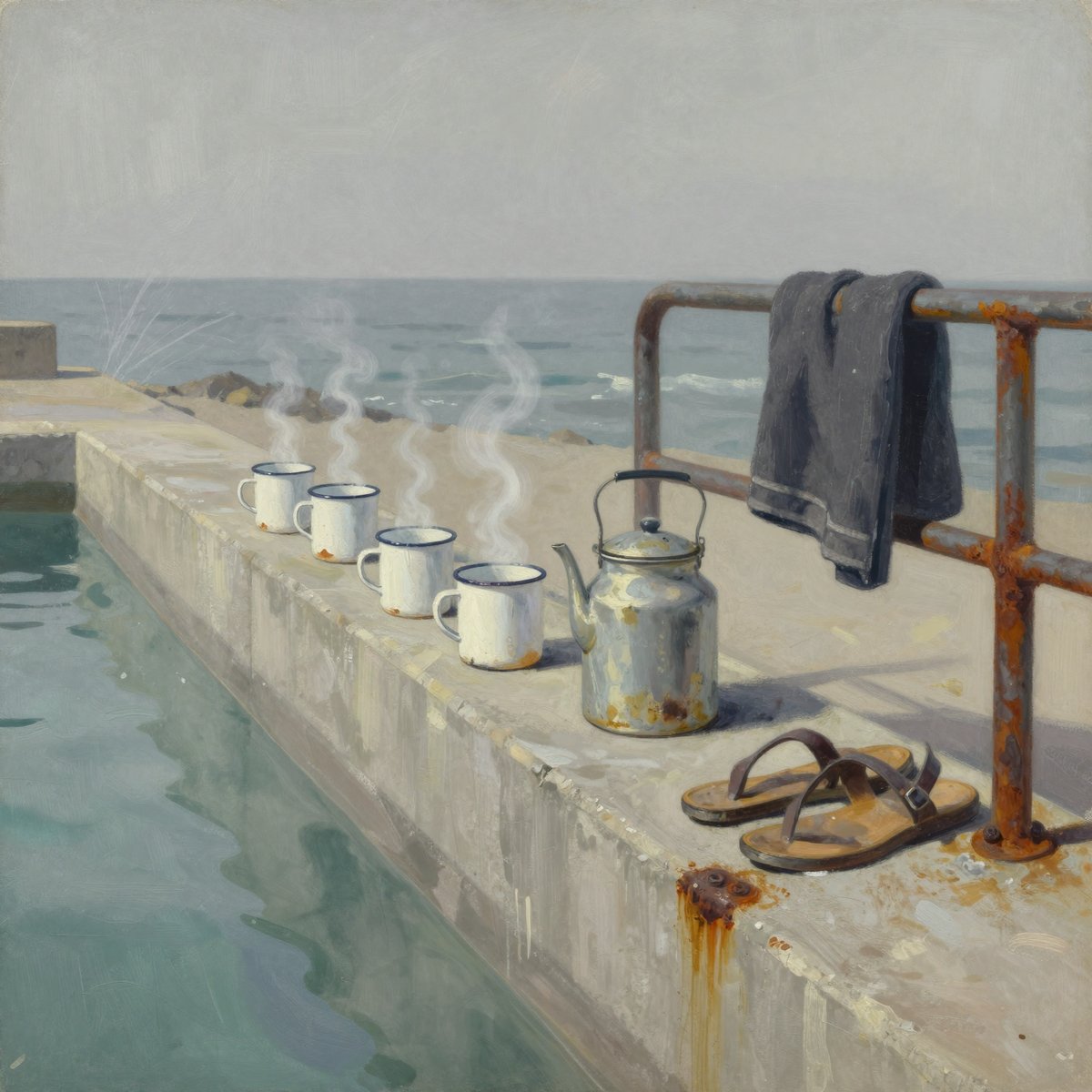
What passes for ceremony: enamel mugs along the wall, the kettle, a wet towel on the rail, somebody's sandals. This is where the talking gets as close as it gets.
The cast
A closed male ensemble, told throughout in one voice. In brief:
- Tom Brennan — Kokoda veteran, builder, surf-lifesaver, and the man telling all six books. Comes back to Bondi with the easy grin missing and finds that cold water is the only thing that makes the day feel real.
- Arthur, Mick and Jimmy — the other three of the core four. Each takes the focus of a book in turn — the man who holds the club together, the man who jokes, the man who is younger than the rest of them and has not worked out yet what it cost.
- Connie Reilly — met through the surf rather than through anyone's introduction, and the woman he marries. She is the reason the grin starts coming back — not because he is fine, but because she makes him want to be.
- The club — the wider membership, including at least one man whose life comes apart in front of everybody, which forces the question the series is actually about: do we look after our own, or do we only say we do?
- Two absent men — Thomas Moran, whose board is on the rack, and James Campbell, who went missing off New Guinea leaving the club's paperwork half-finished. Neither appears. Both run through all six books.
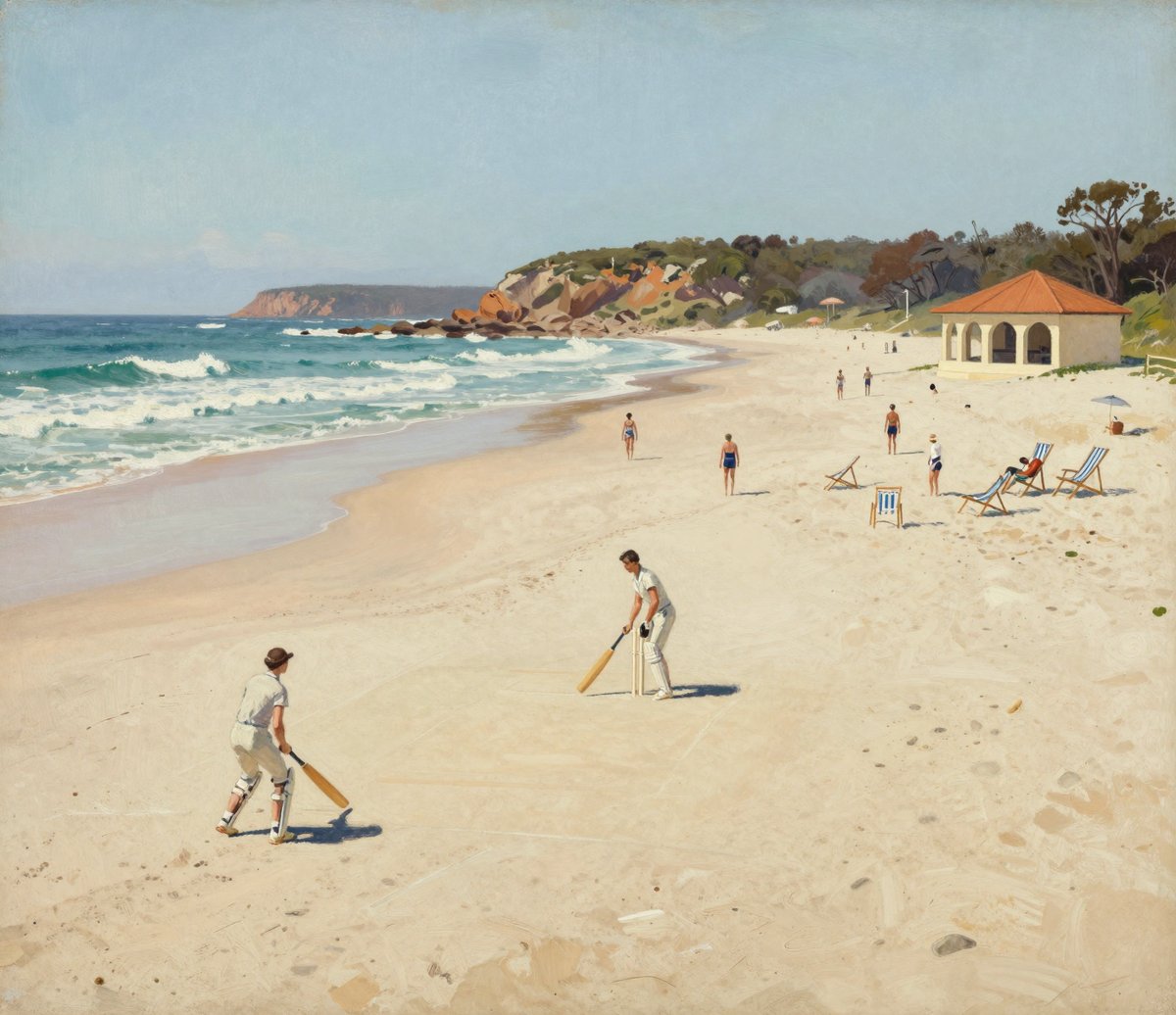
The other half of the year, and the other half of the series: cricket on the flat sand, deck chairs, and the ordinary life the winter books keep looking across at.
The rhythm
Six books alternating winter and summer, and the cold does a different job in each — survival, then absence, then brotherhood, then ordinary life, then grief, then warmth. This is community drama rather than mystery: the pressure on the club is external and civic, a building falling down, a council, a developer, a storm, and the men fix it themselves because that is the only method any of them trust.
The register is embodied and plain — cold, water, breath — and the culture is no-weakness, so the emotional work happens sideways, in the water, in insults, in what is not said. Warm and closed-door where it goes there.
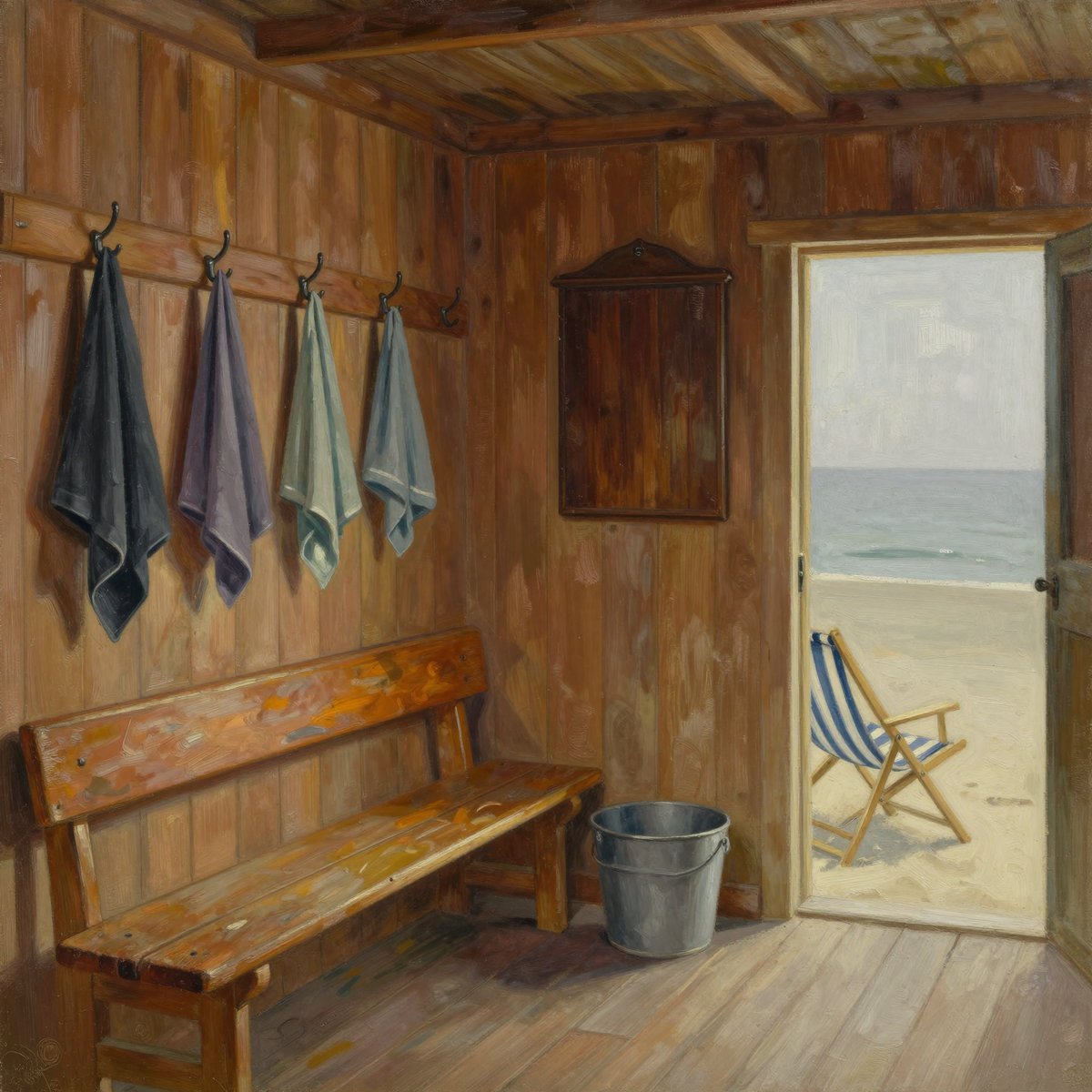
Hooks, wet towels, a bench worn smooth, a bucket, and a board on the wall. The whole plant of the place, and every bit of it needs work.
The question the series asks
What do you do with a way of surviving that has stopped being survival and become a life?
Where to start
One narrator, one club, six books in time from 1945. Each stands alone, but they are a spiral rather than a set of cases, so read them in order.
- The First Cold — start here. Winter 1945. A man off the tram with a kit bag, a clubhouse falling apart after the war years, and a council starting to talk about closing it.
- The Warm Water
- The Brotherhood
- The Ordinary Swim
- The Coldest Water
- The Summer He Stayed In — the last one, and the only title in the six that is a promise: a wedding, a business, a dog, and a man who no longer describes himself as a returned soldier.
The Bondi Swimmers shares its suburb, and several of its people, with the other Bondi series — most closely with The Six O'Clock Leads and the Connie Reilly books.