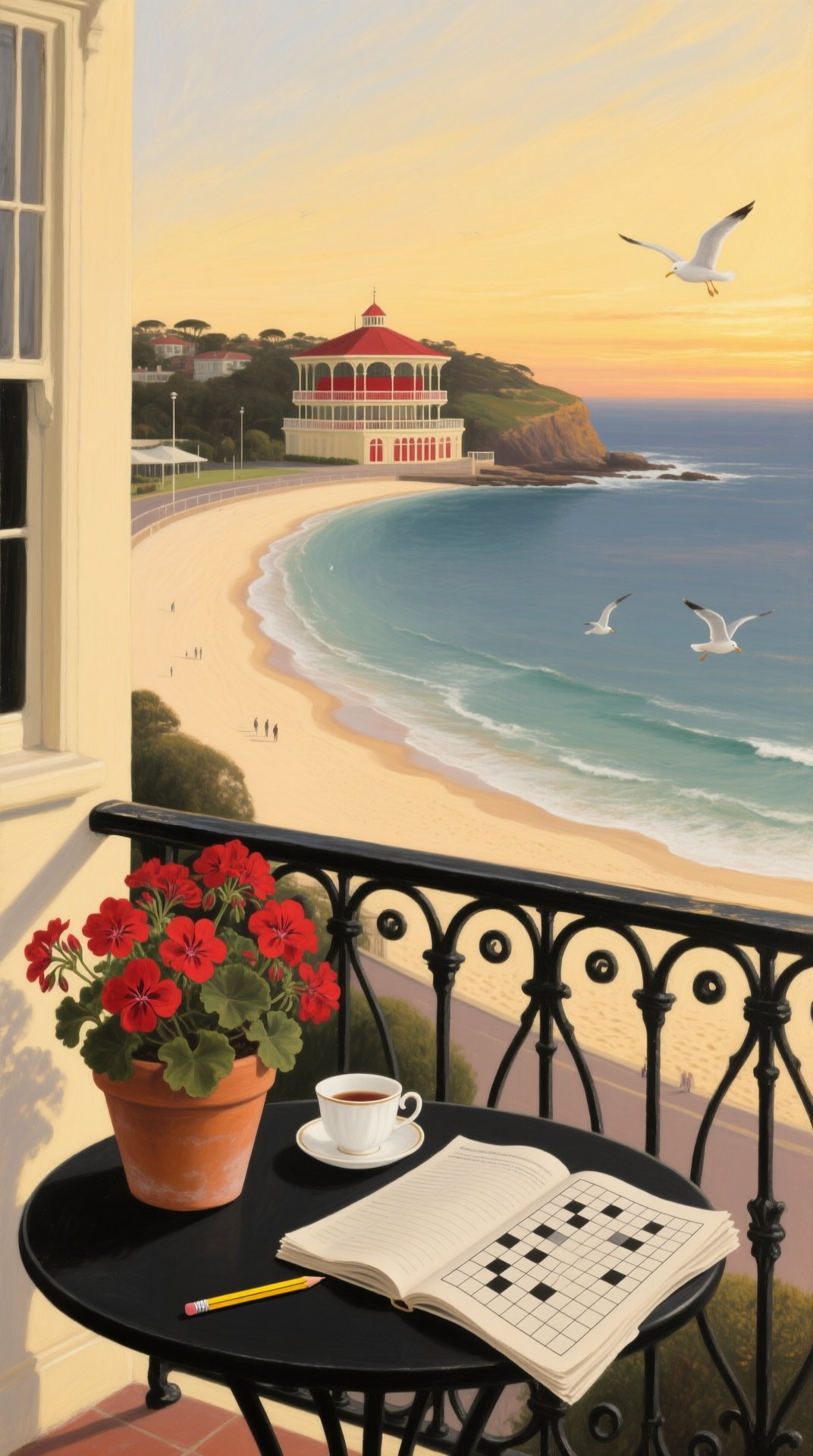
The first hour of the day: the grid, the tea, the bay laid out below like a page already half-filled in.
The patch
A flat at the top of a boarding house on the seaward corner, two flights up, the window left two inches open. Out the door before the kettle has cooled: across at the Campbell Parade corner before the tram starts its run, up onto the headland path, and a stand of grass above the bay that has been hers every morning for two years.
The rest is a desk. Tide tables, shipping schedules, a bottom drawer of notes nobody asked for, and a grid going out to a Sydney paper under a name not quite hers. This patch is wider than the other Bondi books — the newsroom, the ferry, the trams, the university — because what she is being drawn back into was never local.
The set
- The headland flat — two flights up, one open window, a kettle still warm; below it the cliff path and the stand of grass she reads the water from.
- The newspaper office — the crossword desk, an editor called Vance, and the cover story that a woman who sets puzzles is a woman with nothing else on her mind.
- The Manly ferry and Circular Quay — the crossing that takes a conversation out of anyone's hearing, and the only forty minutes of the week nobody can follow her through.
- The trams — the whole city as one network with published timings — which is either a way to be somewhere unremarked, or a way to be traced. It is used both ways.
- The university — the reading rooms and the people who kept working after 1945; where an old name can still be looked up if you know which shelf.
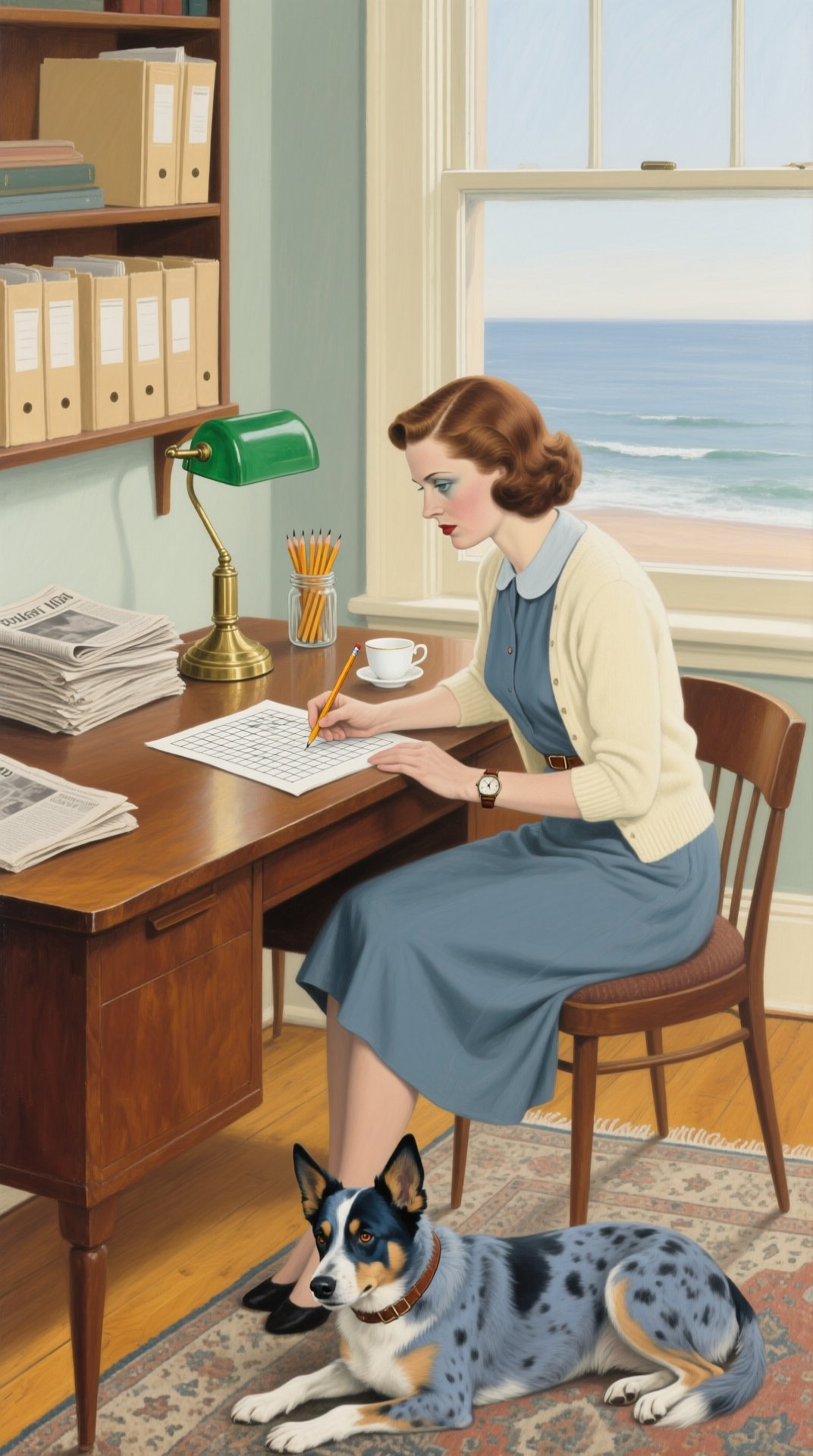
A grid is a room with the furniture already chosen; all that is left is putting the right thing in the right place. The dog under the desk hears the street first.
The cast
Faces and full introductions live on the roster sheet — [Meet the Locals](cryptic-meet-the- locals). In brief:
- Dru Mercer — compiles the cryptic for a Sydney paper. Naval code-breaker in Melbourne in 1944; left the work in forty-six and has been unremarkable on purpose ever since.
- Argus — a blue cattle dog who stops at the spine of the headland before she does. Ears forward, weight forward, and never once wrong about a person.
- Tom Avery — lifesaver, boatman, carpenter when the swell is flat. Home from a war he will not describe, and the one man in Bondi with no idea who she used to be.
- Inspector Jack Halden — former military police, clipped to the point of rudeness. He did not want a crossword woman near his case and finds, to his displeasure, that she is useful.
- Sparks Penhaligon — the wireless shop behind the Parade; a signals man who knows exactly who is listening and how you would tell.
- Maeve — the friend who knew her before any of it, and the only person who can ask.
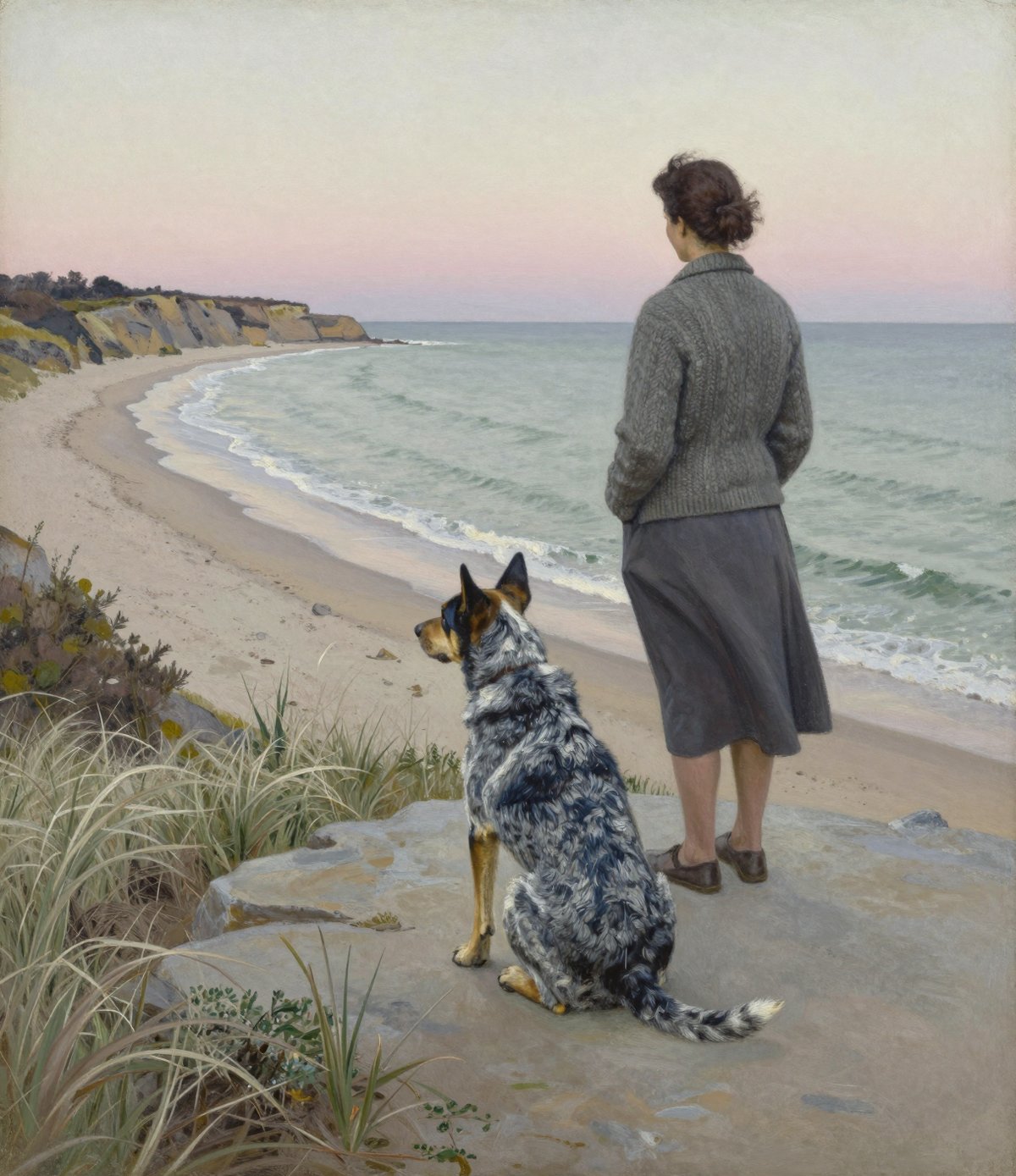
Argus stops at the spine of the headland before she does, and she has learned to look where he is looking. It is the same skill, worked from the other end.
The rhythm
The Bondi outlier. There are murders in these books — always off the page, always puzzle rather than gore — and the register is cooler and more cerebral than the beach around it. Each book carries a local case and a longer thread, and the balance tips a little further every time until the last book is nothing but the thread. The inspector is an ally; what constrains him is not incompetence but an apparatus. Local justice arrives. The larger kind takes eight books.
The question the series asks
How long can you pretend to be ordinary before the pretending becomes the life?
Reading order
Read these in order. The local cases stand alone, but the thread beneath them tightens book by book and the books move forward in time — 1948 at the start, 1954 at the end.
- The Crossword Cryptographer — start here. 1948. A rescue off the rocks, a dead typesetter, and a coded message surfacing where no code should be, inside the columns of her own paper, telling her that the friend who taught her the cipher is alive, and sending.
- The Correction
- Dead Air
- The Ghost Compiler
- The Necessary Traitor — the pivot; the book where the two halves weigh the same.
- The Altered Record
- The Black File
- The Bondi Broadcast — 1954, and no local case at all.