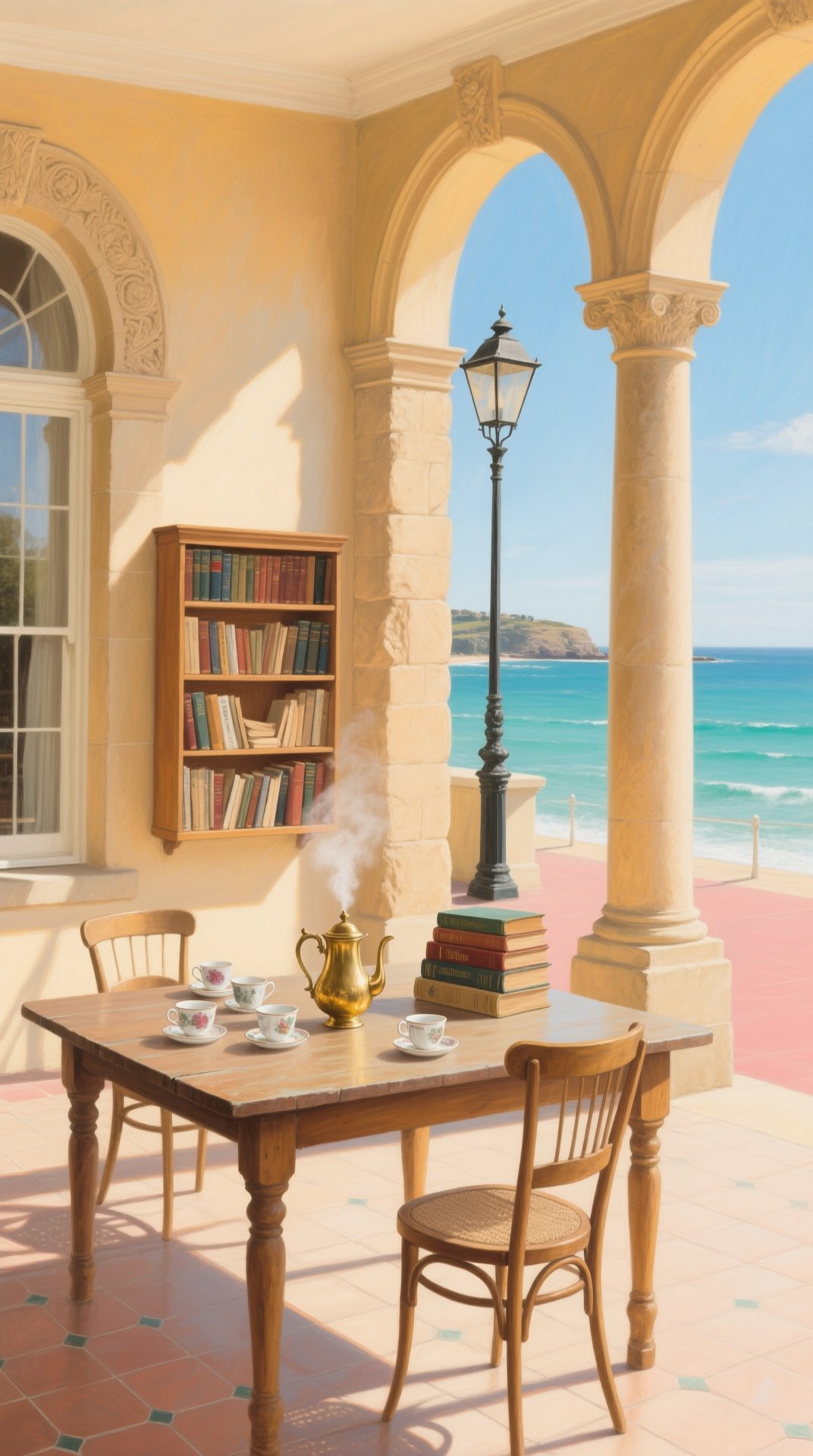
A quarter to, and the urn already going. Everything these books do happens within arm's reach of this table.
The patch
A room at the Bondi Pavilion, one evening a week. The urn comes to the boil at a quarter to, the chairs come out, and the deputy sets out one more than the room needs. Somebody always fills it.
That is the whole apparatus. Everything else in these books happens in the ordinary places four women already are — a boarding-house kitchen at half past six with five places laid, a beach house with nobody in it, a rented room where the mending does not show, a corridor of keys and rosters — and then comes back to the same table on the same evening to be talked about properly, or not talked about at all.
The set
- The book-club room — the Pavilion's loggia and the room behind it: cane chairs, a brass urn, a shelf of borrowed books and the sea through every arch.
- The beach foreshore — where the conversation continues after the chairs go back, because nobody in this club goes straight home.
- The Promenade — the public walk, the place you are seen, and therefore the place a thing becomes official whether you meant it to or not.
- Members' homes — a boarding house, a beach house, a rented room. Four women, four kitchens, and four completely different arithmetics of what a week costs.
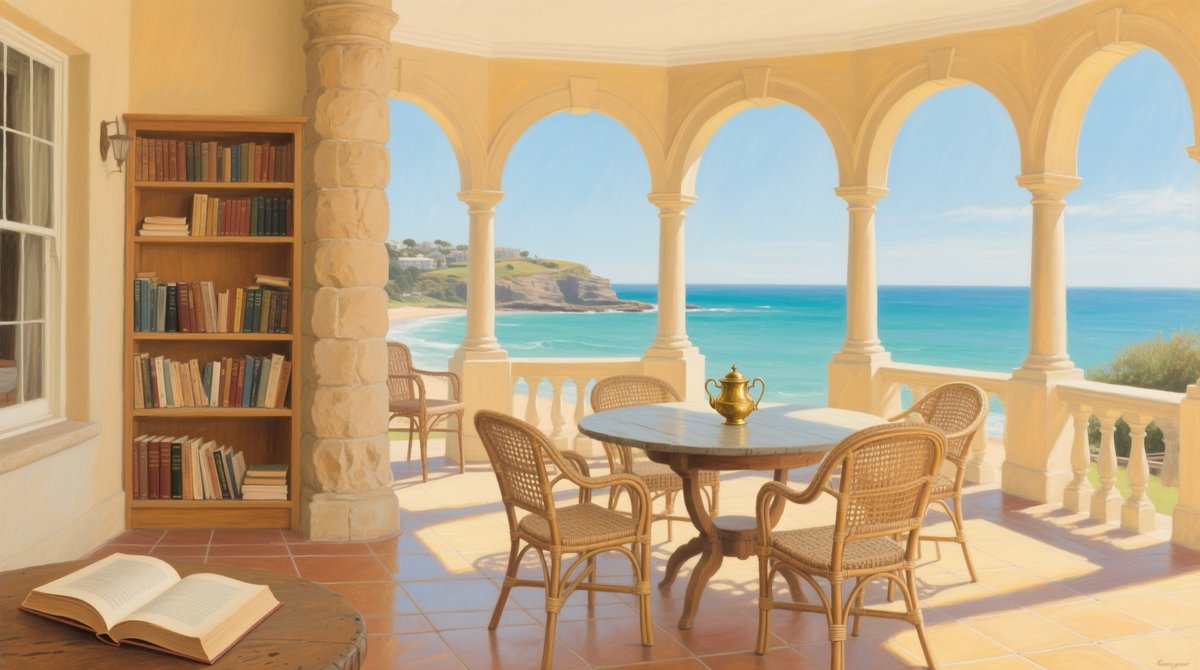
The Pavilion does the work a village hall does anywhere else. It is why the club could exist at all, and why anyone walking past can join.
The cast
Faces and full introductions live on the roster sheet — [Meet the Club](bpbc-meet-the-club). In brief:
- Nell Hartigan — a war widow running a boarding house and raising her son Davey; holds grief and capability in the same two hands, and came to the club for one evening that was hers.
- Birdie Quinn — twenty-two, raising her little sister on almost nothing, with a library card in her pocket and far too much pride to let the mending show.
- Roz Calthorpe — an heiress with a beach house, a city flat and nobody to share either; the poise is a mask worn since she was fifteen, and the love of books is not.
- Marg Ashby-Vale — the Pavilion's deputy, who founded the club, runs everybody's evening but her own, and carries the keys.
- The neighbours — a surfing librarian, a ballet teacher taking up the surf, and a woman with a terrier who is very good at asking questions — the rest of Bondi, wandering through.
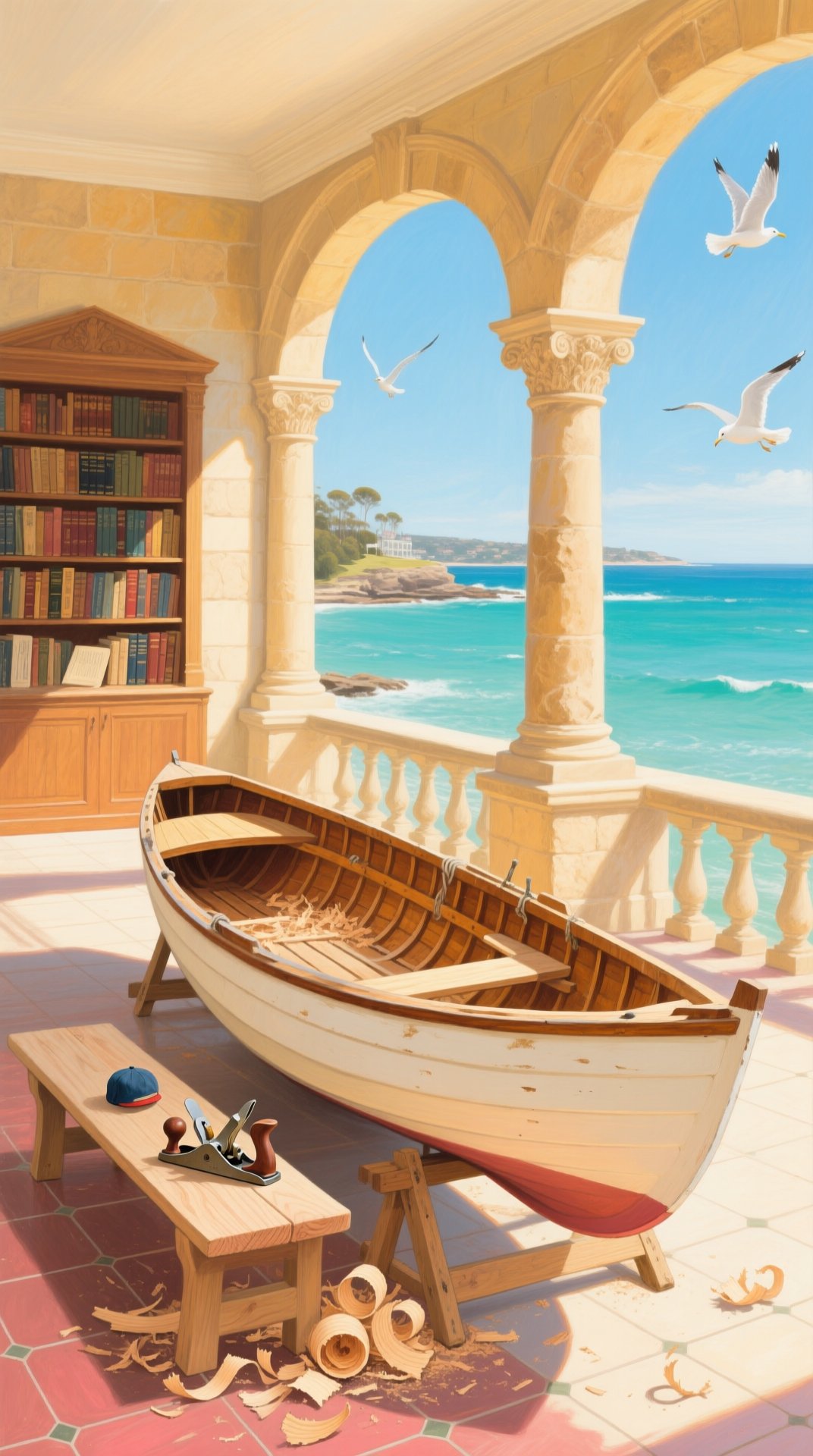
Summer: a half-built boat on the tiles and shavings underfoot. The seasons are not decoration here — each book is one, and each one is somebody's.
The rhythm
Romance is the A-plot and it is warm and closed-door: tenderness on the page, the rest behind the door. Each book belongs to one of the four and takes her all the way to her own ending, after which she stays — in the chairs, in the arguments, in everyone else's book. Underneath runs a second thread, never a murder: something the club closes ranks to protect. It never takes over. Four seasons, four endings, one table.
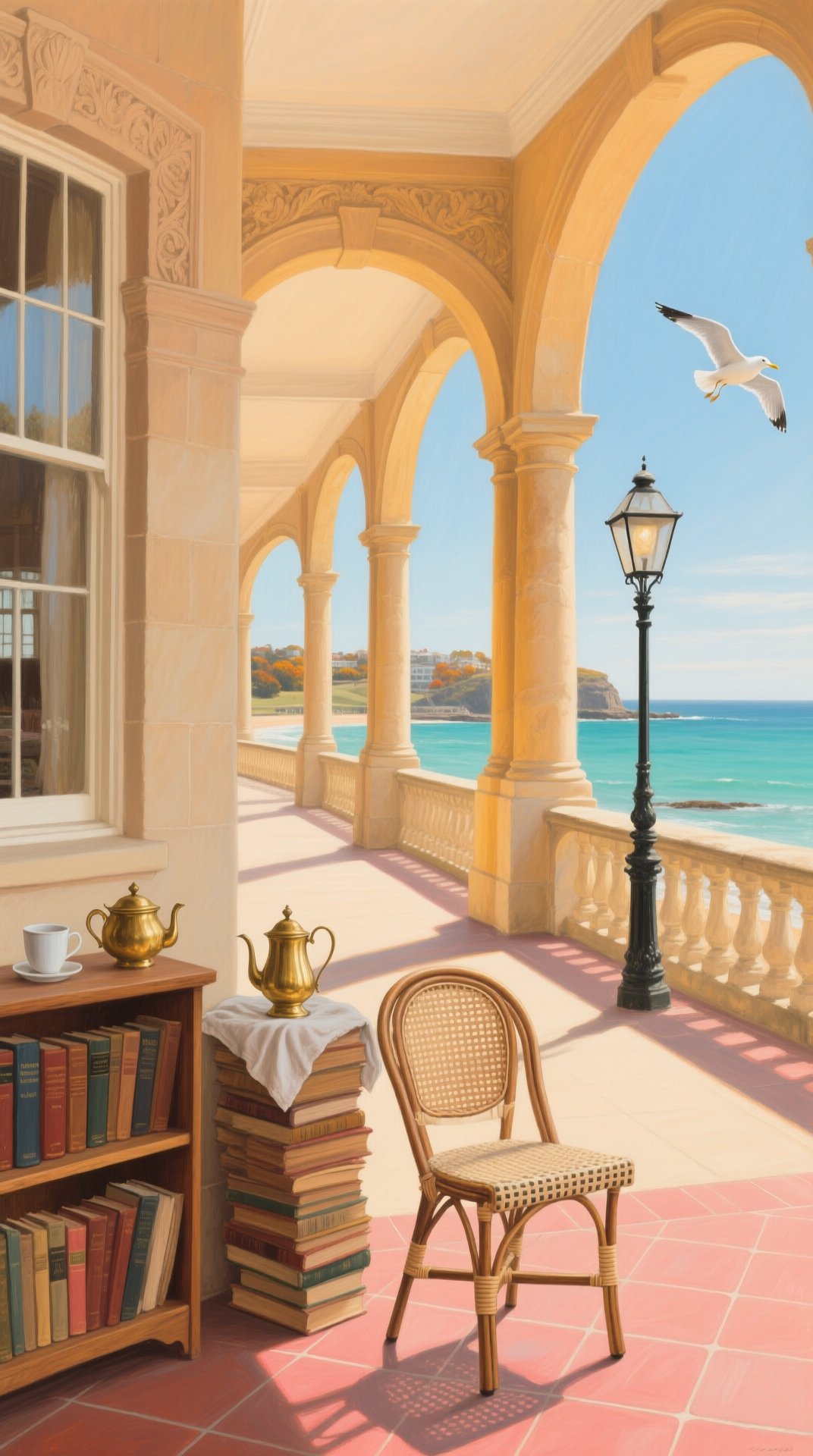
One chair more than the room needs. Marg has set it out every week since she founded the club, and somebody always fills it.
The question the series asks
Can you be loved without being made smaller?
Reading order
Read these in season order. Each book resolves one woman's story completely, but the friendships are cumulative and the woman who gets book four has been holding the door for the other three.
- Summer at the Bondi Pavilion — start here. The widow's book, and the founding of the club.
- Autumn at the Bondi Pavilion
- Winter at the Bondi Pavilion
- Spring at the Bondi Pavilion — the capstone; the deputy's own, last, because she put everybody else first.
A closed four-book series. It ends where it says it ends.