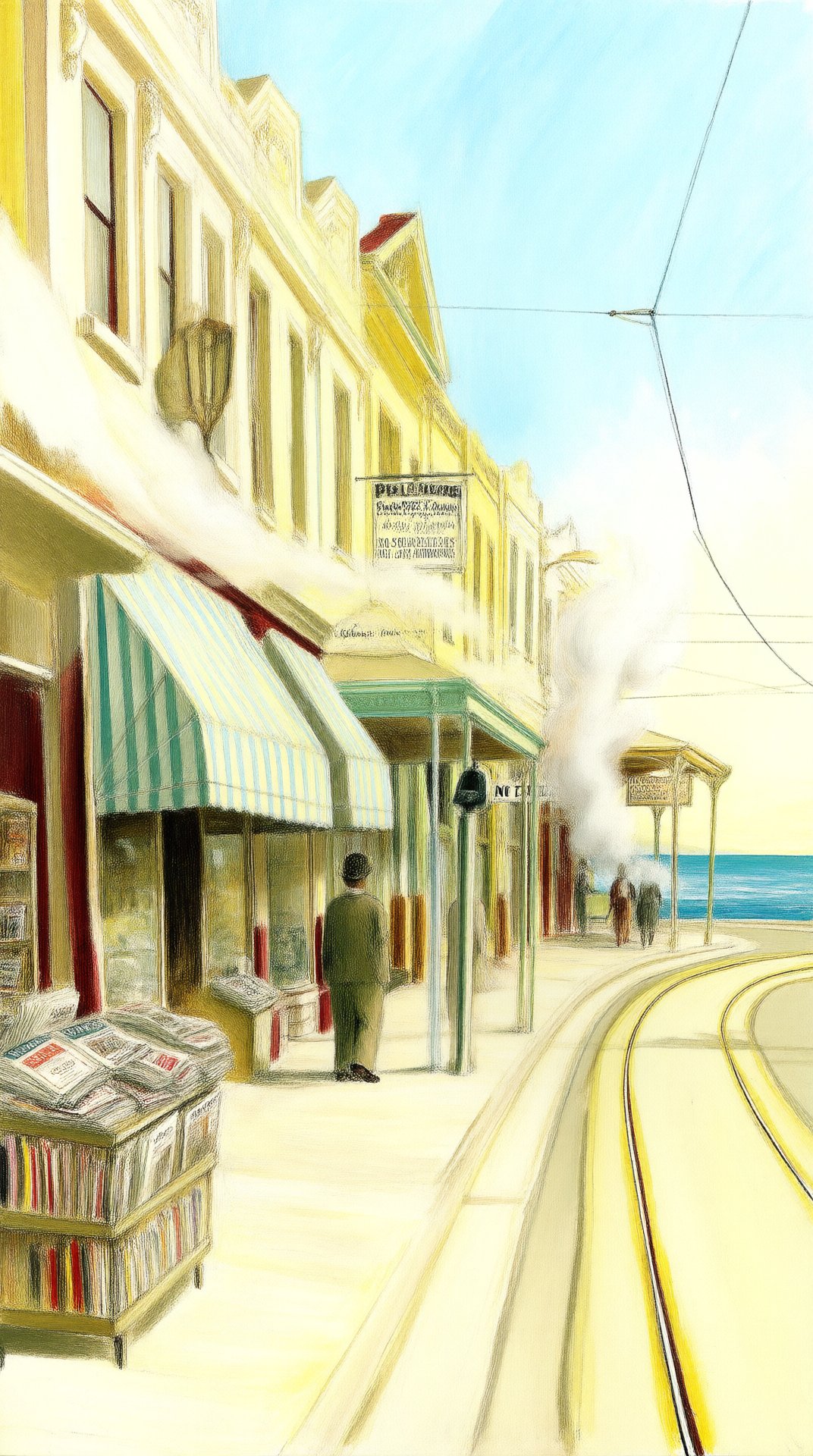
Campbell Parade before the day gets going: awnings, tram wires, the papers out on the stand. Half of what the agency knows started as something somebody said here without meaning to.
The patch
Four years after the telegram that said missing and nothing else, a war widow with a schoolteacher's posture walks a terrier along the tideline before seven, and everything else starts there. The rooms are ordinary — a wall of pigeonholes, a bakelite telephone, a desk lamp, a mat by the door that belongs to the dog. What is not ordinary is the reach.
Dot Campbell knows who runs the tea counter, who owes whom, whose cousin drives for the depot, and she can put a question through that network faster than the police can find the right form. The patch is the beach, the Pavilion and every shopfront on Campbell Parade — and then wherever a case drags her, which is as far as Central, Chinatown and the mountains.
The set
- The Bondi Pavilion — stucco arches, peeling window frames and a penny machine that jams; a building the whole suburb is quietly fond of and nobody is funding.
- Campbell Parade — the tram tracks, the awnings, the newsagent's stand; half of Dot's evidence is something a shopkeeper said without meaning to.
- The tram depot — sheds, rosters, men who know exactly which car ran late and why — and a place where a confrontation can go badly out of sight.
- Central Station — the long roof, the clocks, the train that takes a case out of Bondi and makes it somebody else's jurisdiction.
- The War Widows' Guild and the RSL — the room where the pension is explained and the room where the men drink; the two halves of who came home and who did not.
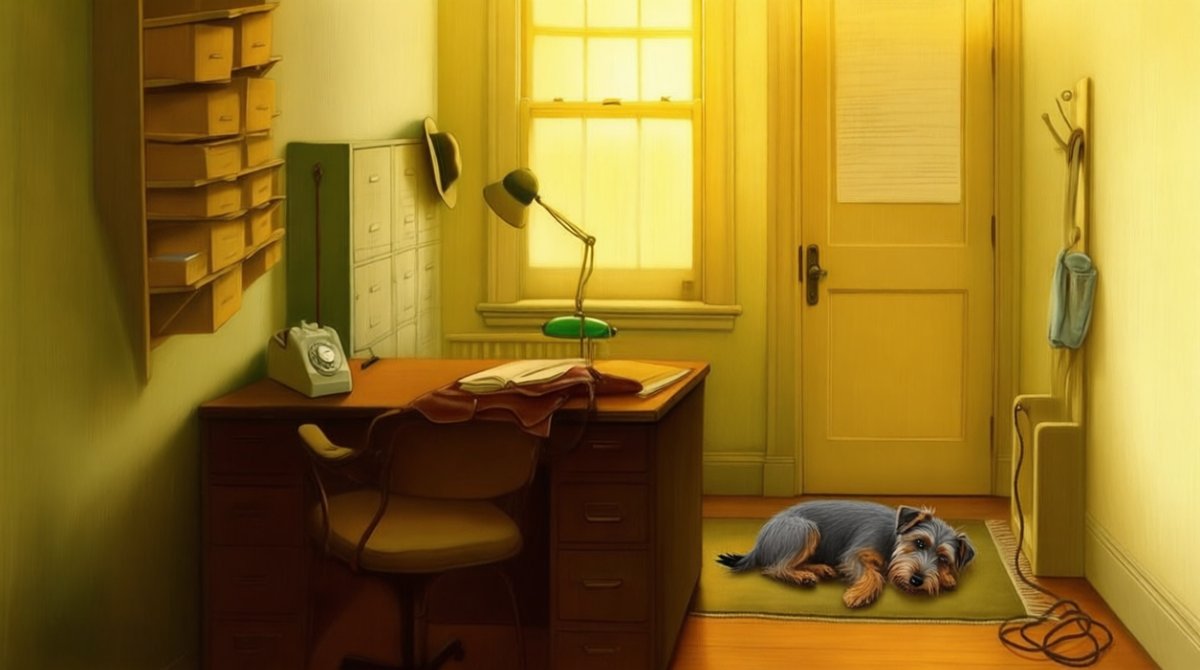
A wall of pigeonholes, a telephone that mostly rings for somebody else, and a dog who has decided where the door is. This is the whole of the agency's plant.
The cast
Faces and full introductions live on the roster sheet — [Meet the Locals](bcda-meet-the- locals). In brief:
- Dot Campbell — thirty-eight, a Randwick schoolteacher until the marriage bar and a widow since New Guinea; runs the agency out of what noticing everything turns into when you finally use it.
- Blue — an Australian Terrier, James's pup, grown by the time the telegram didn't come. Never wrong about a person, and in no hurry to say so.
- Pat and Sparks — the niece who talks her way past doors, and the radio man who can find anything that was ever said over a wire. Between them the agency has legs and ears.
- Meg Comino — Dot's closest friend and the other half of the community web the whole method runs on.
- The police — a sergeant at Bondi station who will not have it, a senior detective who starts the same way, and Detective Cooper, who listens. Dot works around two of them and with one.
- Frank Donovan — property, money and a very good suit; the name that keeps coming back.

Built in the twenties for a Bondi of brass bands and tea dances, and still standing when a good deal else is not. The paint is going on the window frames. Nobody is funding it. Half the suburb would fight you for it.
The rhythm
A cozy spine with real criminals at the edges. A trouble arrives through the community rather than over a body — sabotage, fraud, blackmail, a disappearance — and Dot works it through people rather than procedure, because people is the only instrument she has. There are no guns in these books and nothing graphic on the page; there is menace, and a syndicate with a respectable local face, and real danger. Expect an atmospheric character-forward historical mystery, not a parlour puzzle with a butler.

The method, in one picture: the café man, the woman with the basket, the neighbour with the library book, and a constable who would rather everyone moved along.
The question the series asks
How long do you keep a place set for someone the telegram never finished?
Reading order
Every case is complete in itself, so any of them will do to start — but Dot's own story runs across all eight, and one antagonist recurs at books one, five and eight.
- The Bondi Pavilion Mystery — start here. A jammed penny machine, a building nobody is maintaining, and the first thing anyone brings her that is not a broken wireless.
- The Campbell Parade Conundrum
- The Easter Show Enigma
- The Central Station Caper
- The Tram Troubles
- The Hydro Majestic Hotel Mystery
- The Chinatown Chicanery
- The Five Beaches Caper — the last one; the case that goes back to the first.
If you want the beginning before the beginning, the agency is named into being in The Bondi Tales — but you do not need it to start here.