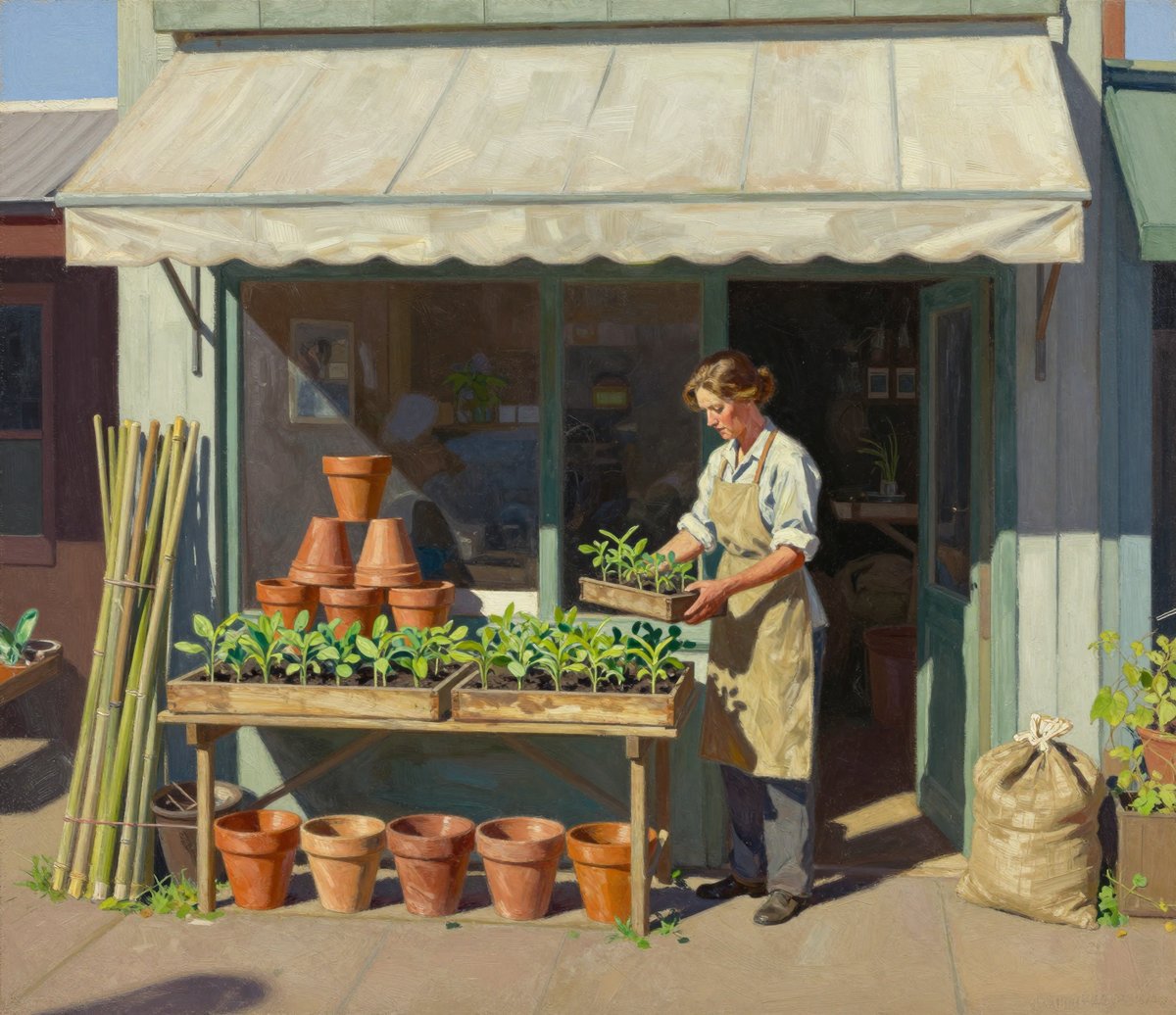
Trestles of seedlings out on the footpath, pots stacked in a pyramid, bundles of stakes, and half the shop belonging to a woman who arrived in September with a bank draft and her husband's tools.
The patch
The garden as witness. Hazel Drummond sells the Western District sheep farm her husband never came home to and buys half of Barrow's garden shop from Nell Barrow, another war widow — premises, customers and books included. Design commissions, the counter, and the indoor and balcony trade carry her into Bondi households at exactly the moment they are having something remade, which is exactly the moment what a place holds comes up out of it.
She is Burnley-trained, and ground keeps a better record than a doctor's certificate. Beds double-dug in August by somebody who does not know gardens. Nine foxgloves stripped to the crown, and the cut scars not all of one age. A maidenhair dead of dry soil in a flat that was watered four days ago.
The set
- Barrow's — the garden shop just off Campbell Parade: seed trays out on the footpath, the yard of stock behind, Nell's ledger desk at the back, and a counter where the suburb talks.
- Hazel's cottage — a small rented weatherboard two streets back from the beach. The first garden she remade was her own.
- The War Widows' Guild rooms — trestle tables, an urn, craft work, and every district secret passing through an organisation still finding its feet.
- Waverley police station — the local response. The CIB men come out from Phillip Street with no local knowledge at all, and that gap is the whole of her access.
- The flower-show hall — the Pavilion dressed for competition. Public rivalry under cut blooms, and thirty years of it.
- Clients' ground — the recurring room of the series — other people's gardens, balconies and window sills, read close because she was hired to read them.
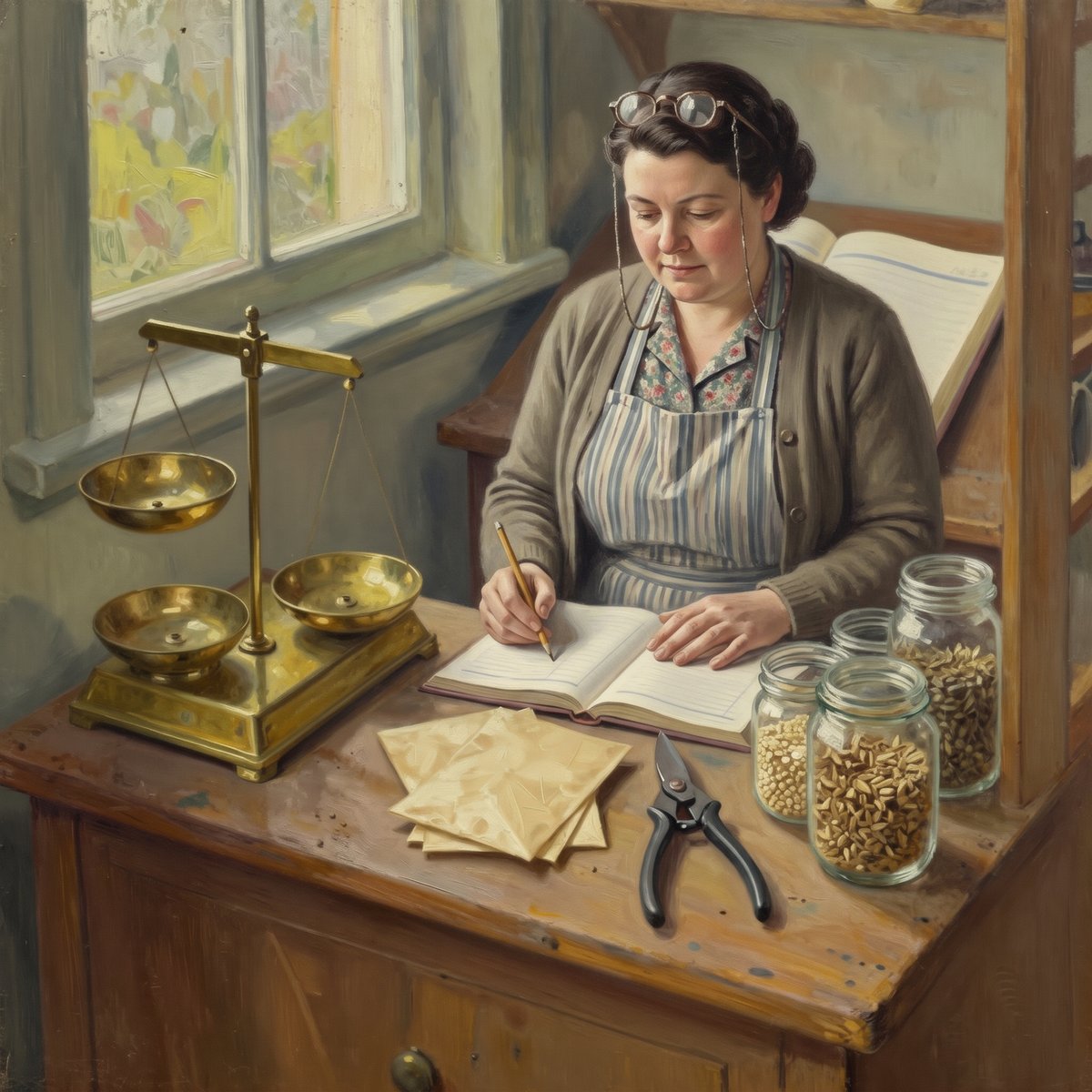
Brass scales, a drawer of plain seed envelopes, and the ledger open on the counter with a column half totted. Nell's half of the business, and the best-informed counter in the district.
The cast
Told in one voice, Hazel's. In brief:
- Hazel Drummond — early thirties, lean and weathered off a farm, brown hair sun-lightened and pinned plainly, nails short and soil in the creases no scrubbing shifts. She wants to be valued for competence rather than pitied for widowhood, and by book eight she is.
- Nell Barrow — mid-thirties, round and quick, reading glasses on a chain that go up to tot the ledger and get aimed over you when she doubts you. She kept Barrow's books and cannot tell a bulb from an onion. The counter is her intelligence service.
- Katina Notaras — nineteen for most of the series, dark-eyed, black curls barely staying pinned, her mother's gold cross worn every day. Kytherian Greek Bondi, pressed toward a made marriage she refuses in book five. Impetuous, certain, and a handful.
- Frank Boyd — thirty, CIB, square and deliberate, a handkerchief half out of his pocket because the dog sets him off. He likes Hazel, is annoyed by her, and is under orders to keep the citizen out of his cases. Promoted in book eight, when the milkshake becomes definite — and a milkshake is exactly as far as it goes.
- Clive Sharpe — mid-twenties, neat as a pin, suits a shade sharper than his pay. Great operative, poor detective: he prefers a quick close to a correct one, and so manufactures a wrongly accused person most books. One bad man, never a corrupt force.
- Moss — a black-and-white border collie, amber-eyed, one ear that will not stand. He was Ewen's dog — Hazel's husband, 2/14th Battalion, killed in New Guinea in October 1943, who never appears in these books and is said aloud once. Moss behaves like a dog and never solves anything.
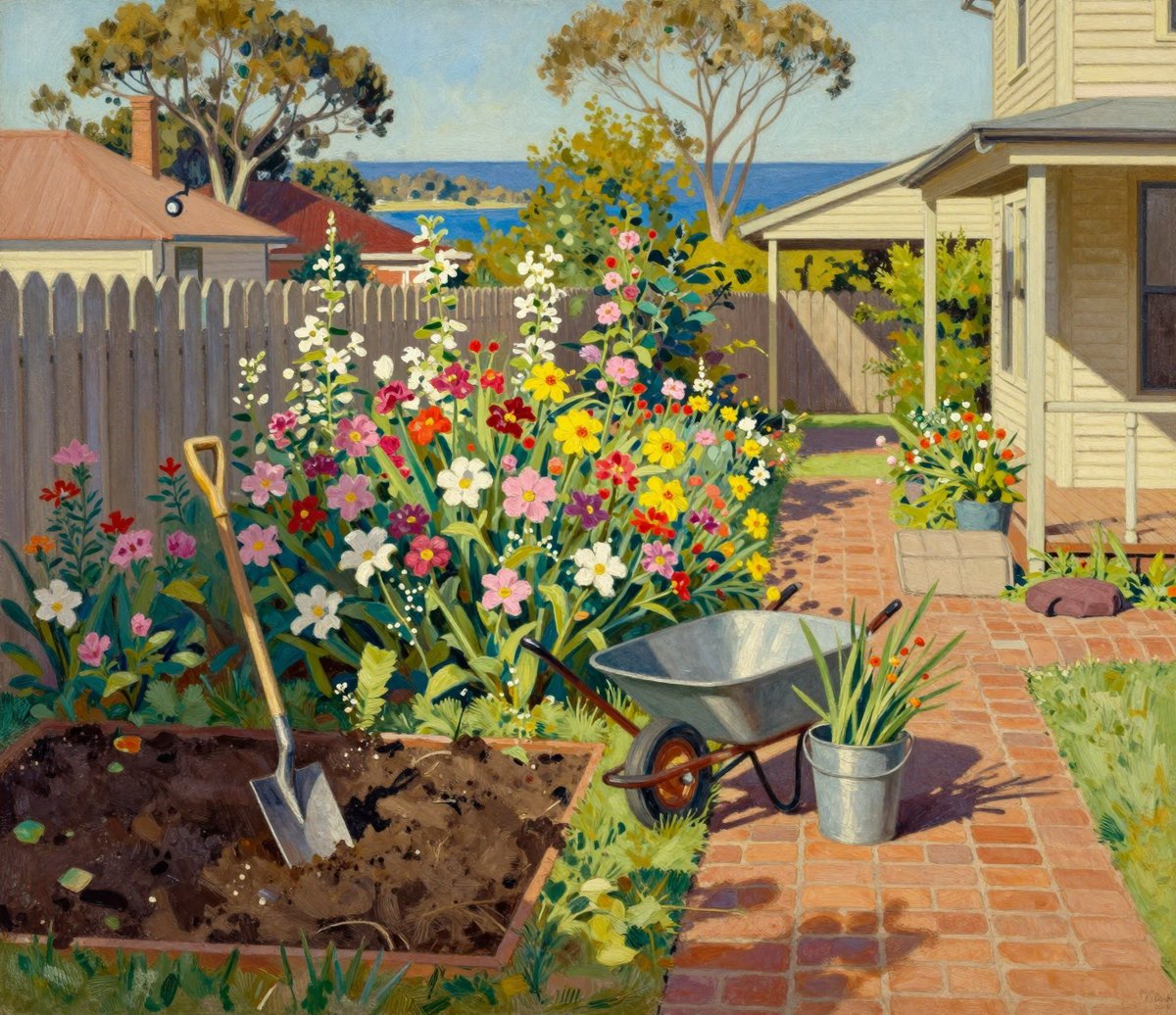
A deep border in full spring bloom, a turned bed with the spade still standing in it, and a brick path to somebody else's verandah. She is here because she was hired. That is the whole of her authority, and it is enough.
The rhythm
Eight fair-play whodunits, one a season, and the seasons are canon: what is blooming, planted or traded in a book is what would be. Deaths are real, bloodless, and always discovered rather than shown. The clues are horticultural, and the reader gets every one of them when Hazel does.
Warm underneath and dry on top. Grief is ground rather than subject: it surfaces in hands and ledgers, never in rumination. The escalation is not bigger, it is more personal.
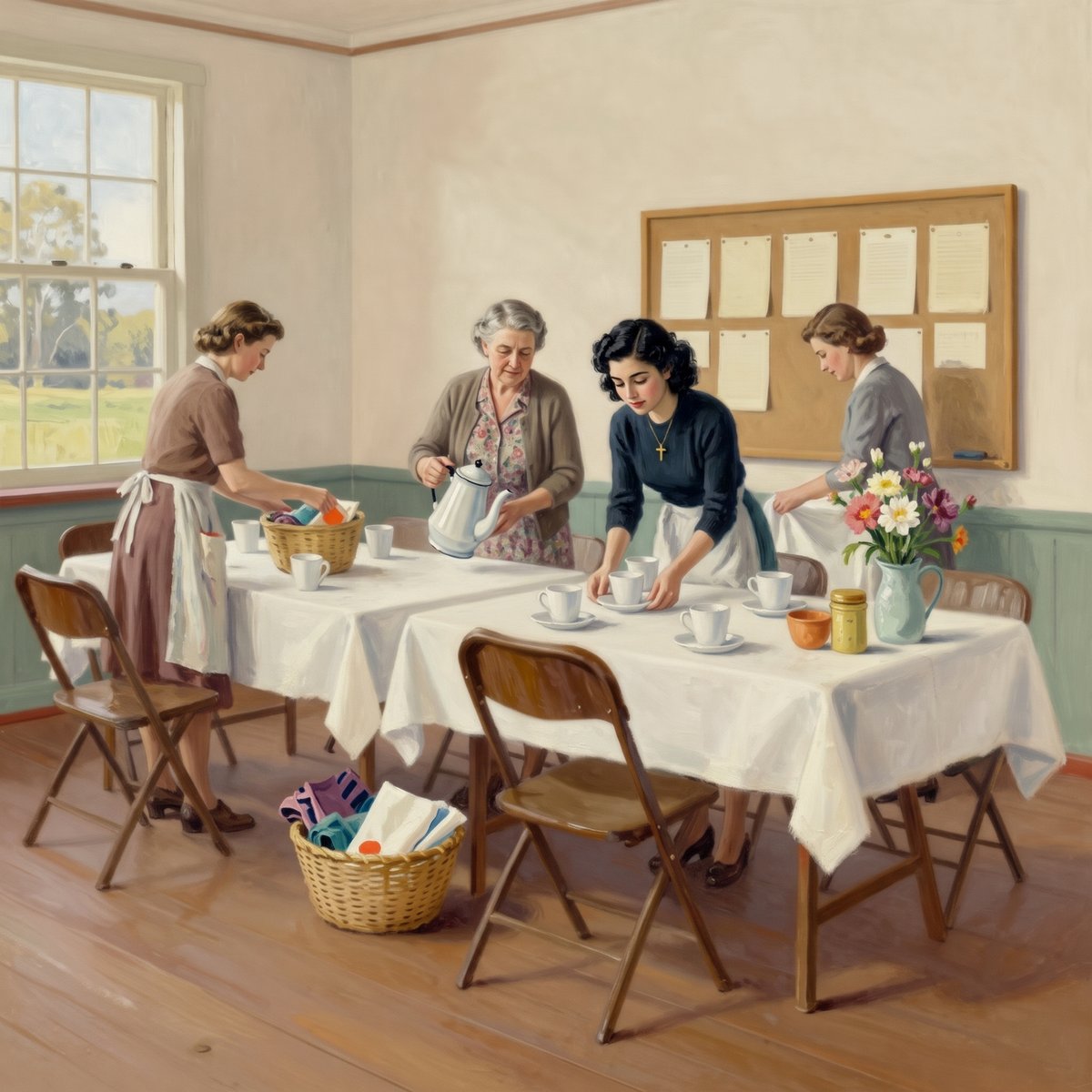
Trestles, white cloths, the cups going out and the urn already on, craft work lifted from a basket and a jug of garden flowers. Twenty minutes before anyone else arrives, and by the end of the afternoon this room will know everything.
The question the series asks
What does the ground remember that the paperwork does not?
Where to start
One book a season, spring 1946 to winter 1948, so the order is the calendar. Each puzzle stands alone; the thread book five lights is the one book eight closes.
- The Spring Garden Murder — start here. A spring overhaul already on the books — deposit paid, beds double-dug in August, seed ordered — and the client dead at seventy and buried the week before. The ground argues with the certificate.
- The Summer Show Murder — a limb comes out of the old Moreton Bay fig above the show platform minutes before judging. Misadventure, the detectives write. Then she goes up the ladder herself.
- The Autumn Planting Murder — the district's gardening columnist pulls a dozen bulbs out of a new glasshouse bed, puts them in his handkerchief and walks out. Six days later he is dead in a lane, and the bulbs are not on the property list.
- The Winter Fernery Murder — the indoor round: twenty flats, one visit a Thursday. A maidenhair stripped to bare stems, the aspidistra a foot away untouched. A fortnight later they force that door. The series spends its one locked-room allowance here.
- The Spring Wedding Murder — three weeks to make and plant a bare block for a wedding, into the family her own Katina is marrying, which nobody at the shop mentioned. The hinge of the series.
- The Summer Memorial Murder — a two-woman shop wins the council's memorial-garden contract because a casual labourer stands on the made ground and tells them where the pit is. Then he stops turning up, which is what labourers do. One length of one bed settles far too much.
- The Autumn Foxglove Murder — five weeks to clear and replant two acres going to auction as fourteen blocks. The garden stopped twice; the second time was the week the old man died in his chair. Then she reads the foxgloves. This is the book where it turns physical.
- The Winter Camellia Murder — she has watered that house every Thursday for two years and can tell you when each fern was last touched. A returned man is in Long Bay for the robbery, and the plants disagree with the police.