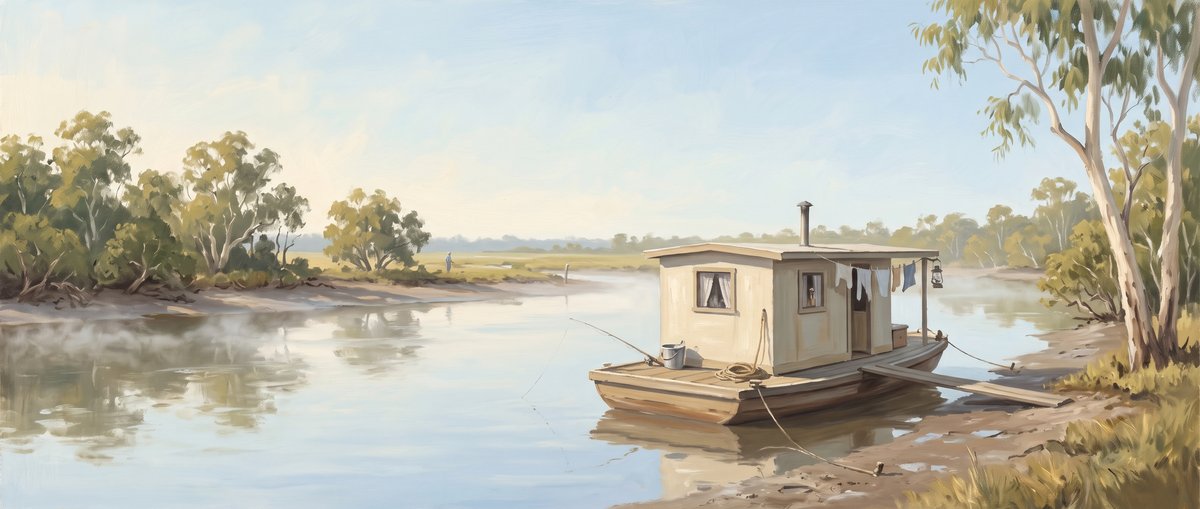
Her father's houseboat, on a quiet reach of the Nerang. Low in the water, plainly not built for open sea, lived on rather than kept. It is her home in all twenty-four books: she is never homeless, never billeted, never in somebody else's staff room.
Inheritance header
Set in the world of The World of the Gold Coast — a strip of Queensland sand between the surf and the Nerang River in 1946, that nobody had yet thought to name. Here is what's ours.
The patch
A woman with no papers, living on the water, working her way toward a house.
Ottilie Sommerfeld was born at sea and her birth was never registered on the Australian side, so on paper she does not quite exist — which is a permanent problem in a district that is busy turning itself into paper: titles, survey pegs, subscription registers, probate files, ledgers. She lives aboard her dead father's houseboat on a quiet reach of the Nerang, pours the tea at the police station where he used to clean after dark, and takes whatever casual work the week offers.
Her father left her no money. He left her six objects, placed with households across the district, and a notebook that records what each object is and which ledger holds its receipt — and never who is holding it. So every book starts as research and ends with her taking a lawful casual job inside somebody else's household or institution, with a real reason to be there and no standing whatsoever. The murder is what she finds once she is through the door.
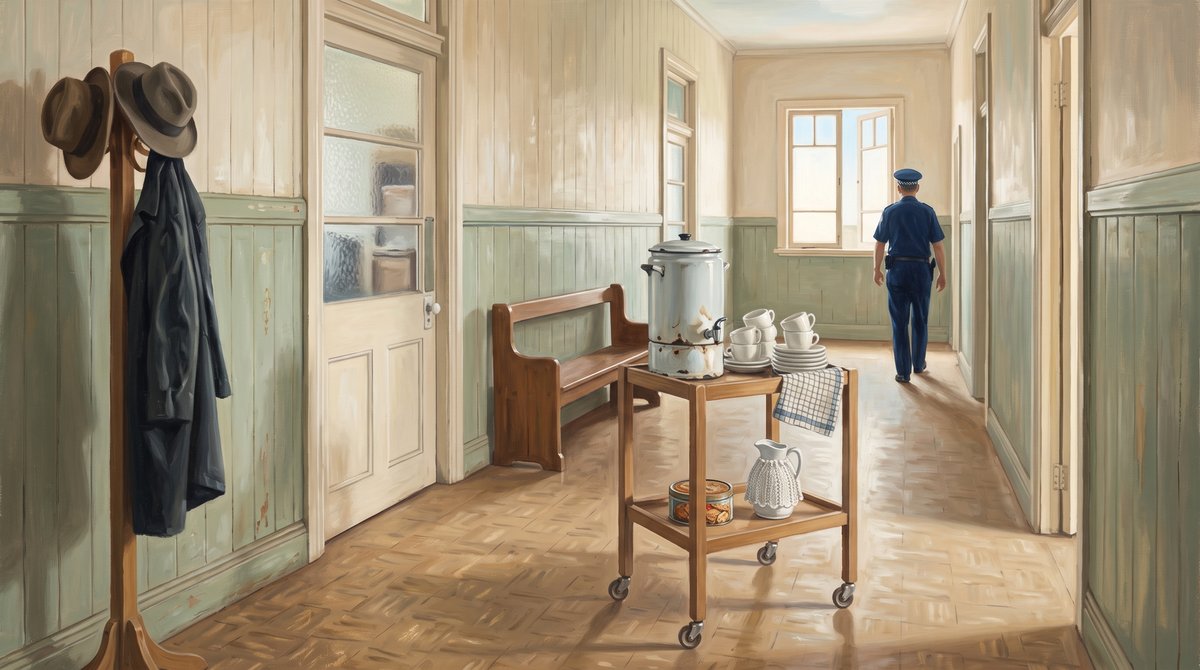
The station corridor, and the trolley she pushes down it. Her father cleaned here after dark; she pours the tea. She is in the room, and nobody counts her as being in it, which is the whole trick of her.
The set
- The houseboat — her father's, low and slow and unfit for open water, on a quiet reach near Southport. Her home in every one of the twenty-four books. She is never homeless, never billeted, never in a staff room.
- The police station tea trolley — he cleaned here after dark; she pours the tea. Access inherited rather than engineered, which is the whole trick of her: she is in the room, and nobody counts her as being in it.
- The Surfers Paradise Hotel — two storeys of brick and cream stucco, nine years old in 1946 and just had an army through it. Worn treads, chipped paint, the chromium gone dull, and nothing to be got to put it right. Busy and shabby at once, Cavill-run the whole span, and still going strong in 1956.
- The zoo, gardens and log cabins behind the hotel — kangaroos, wombats, exotic birds, and also leopards, lions and apes. Large predators in the middle of a small town, and never softened into a petting zoo.
- The marina and the moorage — a fishbowl that floats. Live-aboards, fishermen, a jetty and its regulars: the closed circle that travels with her.
- The clinker dinghy — ten to fourteen feet of varnished overlapping plank, a simple mast and a centreboard. How a woman with no money reaches places other people pay to reach, and genuinely dangerous in a wind shift. Never launched through the surf.
- The Nerang backwaters — mangrove, sand flat, tidal creek and flood-prone low ground where the suburbs will later be. No canals. They do not exist yet, in any book.
- The Broadwater and South Stradbroke — sheltered, navigable, free to anyone who can sail. Camps, isolated huts, and the remains of a subdivision the sea took back. North Stradbroke costs a fare she will not spend.
- Cavill Avenue — the few shops that constitute town, renamed in 1945, so 1946 is its first full year under the name.
- The surf beach and dunes — long, broad, largely empty, clearing fast after sunset. Boards are hollow plywood toothpicks and they live at the surf club, not at a house.
- The Southport School of Arts — a timber hall in Nerang Street: a subscription reading room sharing its roof with the RSL, which the district calls the Memorial Hall. Three bodies with a claim on one room, and no public lending library on this coast until 1958.
- The subdivided blocks and sand tracks — unsealed, badly drained, pegged across scrub ahead of the houses meant to fill them. Allotments about £600, low ground being filled with barrowed sand.
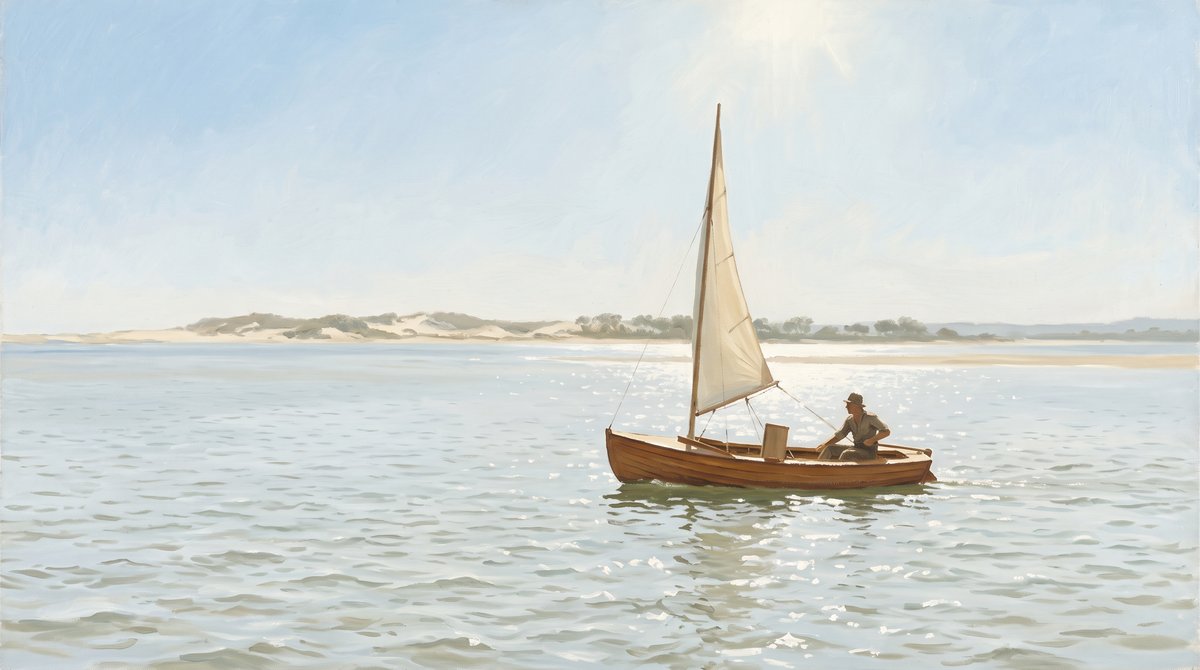
Ten to fourteen feet of varnished overlapping plank, a simple mast, a centreboard. It is how a woman with no money reaches places other people pay to reach, and it is genuinely dangerous in a wind shift. Sheltered water only. Never through the surf.
The cast
Small, constant, and ageing in real time across ten years.
- Ottilie "Tilly" Sommerfeld — narrator of all twenty-four books. Small and wiry and stronger than her size accounts for; dark blonde hair cut short by her own hand. Never quite dressed for where she is — the wrong shoes for the hotel, a good coat over work trousers. Tea lady at the station from book one; hotel staff rising to shift manager and then indispensable; boat repair at the marina, boarding animals, seasonal farm work. Competence without training, sold as a portfolio of casual trades. She survives by not being looked at, and everything she needs requires being seen. She will not marry to get a house.
- Alec Munro — the policeman. A probationary constable on nights in book one, tall and unfinished-looking, the uniform too big for him; a detective by arc five and the uniform finally fitting about the time he is out of it. He knew her father. Their arrangement is unofficial and always will be, and the friction is his changing superiors, never his feelings.
- Edie Larcombe — the friend, constant from book one and co-lead through arc three. Soft and round and quick on her feet, hair pinned and coming down by afternoon. Seasicks easily and cannot swim, which is a real limit on a Line that moves by water. Her child died and her marriage broke before book one; both are backstory, neither is anyone's fault, and neither happens on the page.
- Cec Gaunt — the station sergeant, heavy and slow-moving, a man who sits down to think. He never once uses her surname. He is the source of the tolerance — the person who decided years ago to let her stay — which is why his going, late in the Line, closes a door rather than merely saddening one.
- The cockatoo — her father's bird, aboard before she was, and sulphur-cresteds outlive people.
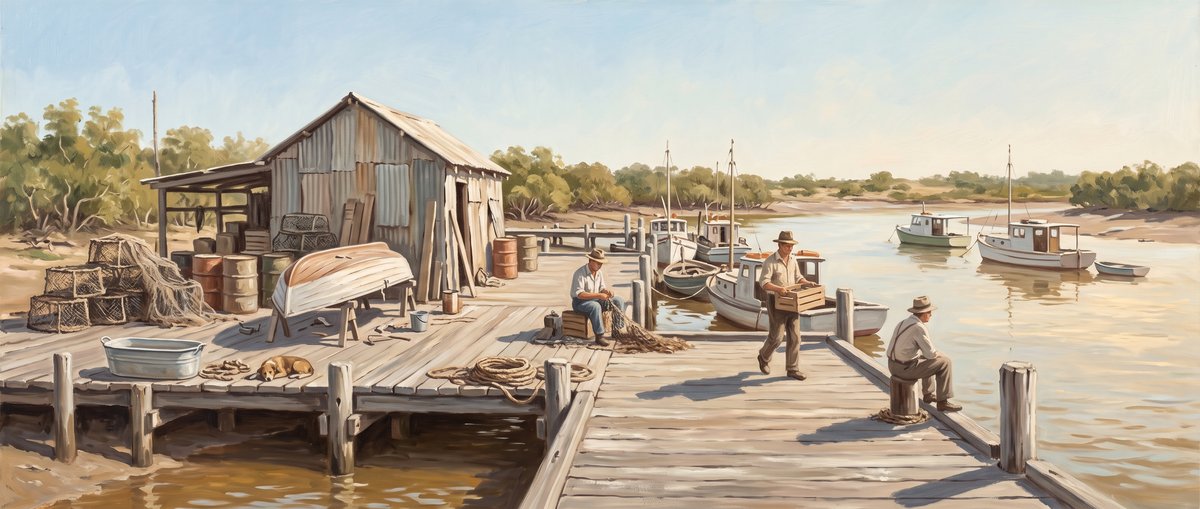
The jetty and its regulars: live-aboards, working gear, a hull up on the hard and somebody always about. A fishbowl that floats, and the one closed circle that travels with her from book to book.
The rhythm
Twenty-four self-contained mysteries carried on one continuous, physical, measurable ambition. Each book is its own fair-play puzzle, solved on timeline, opportunity and attention — never on forensics, never on ballistics. Each is also one rung of a ladder that runs the whole decade.
The ladder is six rungs, one per arc, and it is causal all the way down: no materials means she fells her own timber with the tools from an earlier arc, and those become the piles and the fence; no road means the finished house has to arrive by water.
And the plan fails twice, on purpose. The rhythm across the six arcs is win, win, refuse, double win, lose, win. Once she is handed the thing she has been working toward, understands what it actually is, and gives it back. Once the object is simply gone — sold years ago at a clearing sale, never recovered — and what the arc gives her instead is people, and the knowledge that heavy things move by water at all. She is also, at one point, wrong rather than merely thwarted: the cheap block is cheap because it is swamp, and swamp will not take footings.
She does not stop living aboard. She stops having to be tolerated.
Deaths are off-page and bloodless. Jeopardy is weather, tide, attention and money. Warm, dry, unsentimental, closed-door, and restorative — and six of the twenty-four books have no body in them at all.
The question the series asks
### What is a place worth before anyone has decided what it's for?
The Line answers it in the most literal available currency: one woman trying to buy a piece of a district while the district's price runs away from her, over ten years, in public. Around that, naming as power — Elston against Surfers Paradise, and the Gold Coast sneer coming up the road — and what a place knows set against what a place is worth on paper.
Change is the subject, not the threat. This is not a lament, and development is never the default villain.
Where to start
Book 1, A Death in Probate. One continuous reading order, twenty-four books, shelved as six four-book arcs.
Comps: Kerry Greenwood (Australian period woman sleuth — warmer, poorer, closed-door), T. E. Kinsey (period wit, a chaste spark with a policeman), and the Alexander McCall Smith register of competence and affection.